Libby App: Improved Access to Public Library eBook and Audiobooks

Public libraries have offered eBooks for a while, but I stopped using the service because it was too much work. There weren’t that many popular titles available, and finding them was tedious with a waitlist of unknown length. When you did finally get the book, I couldn’t read it on my Kindle and would have to use a clunky third-party Overdrive app. These small hurdles meant that I often wouldn’t finish the book before the due date, upon which the book was unceremoniously yanked back into the cloud.

Happily, I recently discovered the Libby app by Overdrive, which has improved the overall experience dramatically. (Thanks Tom.) You can sign into multiple libraries*. The app is well designed and makes it easier to find titles, and an estimate of the waitlist time is included. Your eBook can be automatically checked out when your turn is up. In addition, there is:

  • Built-in eBook reader that is much improved.
  • Built-in Audiobook player.
  • If allowed, it will send the book to your Kindle device.

Basically, everything can be done within one single app.

This may just be my local library, but the selection also seems to have improved. It’s not perfect as the books seem to come in clusters so it’s hard to read them all in time (I wish there was a defer option to be next in line), but I like that I can at “try” many books for a few chapters and return it earlier if I don’t like it. If I do like it and want a permanent copy (I still prefer to buy physical books), I can buy it on Amazon or the local bookstore.

Bottom line. If you want to try an easier way to borrow free eBooks from your local library, check out the new Libby app.

(* If you join multiple libraries you can expand your access to different ebook/audiobook titles. There are some listed that offer non-residents a library card via mail/online and only charge a nominal fee.)

Chase Bank Bonus: $600 Total Checking + Savings, 60,000 Point Upgrade to Sapphire Banking

Chase Bank has updated banking promotions for new customers without a Chase Bank account (closed more than 90 days ago and haven’t gotten a bonus in the last 2 years). The first bonus is for their Total Checking and Savings accounts, and if you satisfy that and have a Sapphire credit card, you can upgrade to the Sapphire Banking with higher requirements.

  • Up to $600 for opening a new Total Checking + Savings account. You must move over a direct deposit on the new checking account ($300 bonus), and/or deposit and maintain $15,000 in the savings account for 90 days ($200). Do both, and get another $100, for $600 total. The easiest way to avoid monthly fee is to keep $1,500 in Total Checking and $300 in Savings.
  • 60,000 Ultimate Rewards points for upgrading to a Chase Sapphire bank account. Got a Chase bank account and a Sapphire credit card? They want your business, so take a look at their upgrade offer to Sapphire Banking. You must move over $75,000 in assets (bank deposits or securities) to Chase Bank or Chase You Invest brokerage. You can simply move over some existing stocks, ETFs, or mutual funds via ACAT transfer and your tax cost basis should transfer. Alternatively, you could buy US Treasury bills in the brokerage account as an alternative to Chase Bank’s sad interest rates. You need to also have the Chase Sapphire Preferred or Chase Sapphire Reserve credit card.

Together, this could be up to $1,500 total value. If you have the Chase Sapphire Reserve card, the 60,000 points are worth $900 towards travel (or 60,000 airline miles). $900 airfare/hotel/car rental value + $600 cash = $1,500. If you have the Chase Sapphire Preferred card, the 60,000 points are worth $750 towards travel (or 60,000 airline miles).

Here are previous posts on the Chase Total Checking bonus and Chase Sapphire Banking bonus with more details.

TopCashBack Existing User Promo: Free Fall-Themed Dish Towel ($2.99 Value)

If you shop at Target stores and are an existing TopCashBack portal member, grab a free $2.99 Thanksgiving Dish Towel at this link. Offer expires Sunday, October 21st at 11:59pm PST. Instructions:

1) Simply click the “Get Offer” button to go to the Target website.
2) Purchase any $2.99 Select Threshold Kitchen Towels then shop as normal.
3) Within 7 days of purchase, you’ll see the transaction in your TopCashback account
4) Once confirmed, your transaction will become payable within 14 days.

Not worth a special trip, but free is free. You will have 7 days to pick it up after order confirmation. I also see an optional button online to extend pickup for an additional day past that. If a specific towel design is not in stock at your location, try another one. TopCashBack likes to offer little freebies to all existing users now and then to keep us aware of their service.

Ally Bank Payback Time Promotion: 1% Additional Cash Bonus (~6% APY 3-month CD)

Ally Bank has a new promotion called Ally Payback Time that is offering a 1% cash bonus (up to $1,000) on new deposits on top of their existing interest rates. Valid for both new and existing customers. Given the holding period, this roughly equates to the same total interest paid as a 3-month bank CD at 6% APY. Here’s how it works:

  • Enroll by 10/21/18 at ally.com/payback. You must enroll or you won’t get the bonus. Existing customers must enroll with the same e-mail as linked to their Ally bank account.
  • Fund account by 10/31/18. This means your account has to be approved, opened and funded by this date. Technically the terms state that the funds must arrive by 11/5/18, but that is likely just a grace period and you should initiate any fund transfers by 10/31/18.
  • Maintain funds through 1/15/19. You must keep your new funds there through 1/15/19. This is really only a 2.5 month period if you waited until the last moment. Withdrawals may lower your bonus.
  • Get cash bonus on 2/15/19. After another 30 days, they will deposit your cash bonus into your Ally account.

To be clear, the bonus applies to new funds added to an eligible Ally bank account, not your total balance. Eligible accounts include Ally Online Savings, Money Market, Interest Checking, and CD accounts.

Rough math. The current rate on the Ally Online Savings account is 1.90% APY, and the 11-month No Penalty CD is 2.10% APY on $25k+ balances (as of 10/15/18). Given that you can an additional 1% bonus in a bit under 3 months, the bonus itself works out to the equivalent of a 4% annualized yield. 2% plus 4% = 6%, so you’re looking at the equivalent of a 3-month CD at 6% APY for new money deposits between $1,000 and $100,000. At such a high yield, this promo is a “no-brainer” when compared to other liquid savings accounts for the next 3 months.

The promo page has a calculator to show you your total cash earned over a year. If you move over $10,000 at 1.90% APY, you’d get $190 of interest in a year plus a $100 bonus = $290 total. That would work out to a total of 2.9% APY if you were lazy and just kept it all there for a year. Still not too shabby.

Should I move money out of Ally and back in to qualify? No, it won’t make any difference as Ally has already thought of that. All new funds added after 10/8/18 will count as new money for this promotion. They’ve already set the start date in the past, so you gain nothing by delaying your enrollment.

Existing customers. As a longtime Ally accountholder, I’m happy to see that this offer includes existing customers, even if it has to be new money. The promotion should be called the “Ally Money Comeback Time” as lots of people are probably bringing back funds that in the past year or so.

Payback Time? This YouTube ad explains the meaning behind “Payback Time”, basically the megabanks pay you no interest and keep it for themselves:

Bottom line. Ally Bank has a new promotion to attract new money (or bring back old money). You get a 1% cash bonus (up to $1,000) on new deposits on top of their existing interest rates. For their savings account, this works out to a 3-month holding period paying roughly 6% annualized interest. You must enroll soon by 10/21 and your account must be opened and fully funded by 11/5/18 at the very latest.

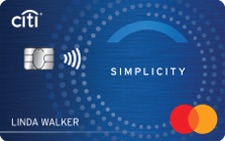
Citi Simplicity® Card Review: 0% Intro APR for 21 months on Balance Transfers, No Late Fees, No Penalty Rates

Interest rates are rising, and that applies to credit cards as well. The Citi Simplicity® Card comes with an extended 0% intro period for balance transfers while also offering some “accident forgiveness insurance”. Do you have a balance that you are finally ready to pay off? The highlights:

  • No Late Fees, No Penalty Rate, and No Annual Fee… Ever
  • 0% Intro APR for 21 months on balance transfers from date of first transfer and 0% Intro APR for 12 months on purchases from date of account opening. After that the variable APR will be 18.99% – 29.74%, based on your creditworthiness. Balance transfers must be completed within 4 months of account opening. There is an introductory balance transfer fee of $5 or 3% of the amount of the transfer, whichever is greater for balances transfers completed within 4 months of account opening.
  • Stay protected with Citi® Quick Lock
  • Simplicity = No Late Fees, No Penalty Rate, and No Annual Fee.
  • Simplicity = When you want to speak to a human, just call and say “representative”

No late fees, no penalty rate details. On most other credit cards, if you make a late payment, you’ll first be charged a late payment fee of about $35. On top of that, your super-low interest rate disappears and instead gets jacked up to something called their “default rate” or “penalty rate”. This could be over 30% APR! This card adds a bit of flex in that they do not charge penalty rates or late fees.

Note that if you are 30 days late on this or any credit card, Citi will still report this activity to the credit bureaus. This card may be forgiving but you should still keep your credit score as high as possible.

The strongest part of this card is the long 21 month period, so you can spread out payments over 1.75 years and ideally pay it all off by the end. There is a 5% balance transfer fee ($5 min). 5% works out to under 4 months of interest at 18% APR. Transferring a balance to this card from a 18% APR card would be the equivalent of under 4 months interest at 18% APR and then having 17 months with 0% interest. Once the intro period on all 0% cards expire, the rates will go right back up. You’ll either need to pay it off or transfer your balance again if you need more time. With this card, you’ll have a full 21 months to spread your payments out.

Alternatively, if you are certain that you will pay it off within a shorter time period, look for a card with no balance transfer fee. Compare with other low fee 0% APR balance transfer offers.

This card does not earn any cash back, points, or airline miles. Many times, rewards cards are bad deals for those carrying balances. I’d open a separate card for rewards after your balances are paid off and you join the “Paid in full every month” club.

Bottom line. The Citi Simplicity® Card is best for folks that are serious about paying off their balances. You get a long 0% introductory period of 21 months on balance transfers along with consumer-friendly features that help ensure your low rates don’t get hiked with a single late payment. If you do the math and can make adequate payments to pay down your balance over a 21 month (1.75 years) span, this card may help get you debt-free with minimal gotchas. No annual fee.

Citibank $500 Checking Account Bonus 2018

Citibank has $500 bonus offer when you open a new eligible Citi checking account 10/1/18 through 12/31/18 and complete qualifying activities. This offer is restricted to those who have not had a Citibank checking account within the last 180 calendar days.

Here are the bonus requirements, condensed from their full terms and conditions:

  • You must first enroll at citi.com/checkingrewards (or in-branch).
  • You must open a new Citibank Checking and Citi Savings Account in “The Citibank Account Package”.
  • You must make a deposit of $15,000 or more (multiple deposits okay) in “new-to-Citibank” funds within 30 days of account opening.
  • For the $400 bonus, you must maintain a minimum balance of $15,000 for 60 consecutive calendar days after deposit. The $15,000 can be spread between checking and savings.
  • For an additional $100 bonus, you must also complete a “Qualifying Direct Deposit” into the Checking Account for two consecutive months within 60 days of account opening. Payroll works but any ACH transfer accounts (i.e. interbank ACH counts).
  • The $400 or $500 bonus which will be credited within 90 calendar days from the date you complete all required activities.
  • Note that accounts with a zero balance for 90 days are subject to automatic closure and closed accounts can’t get the bonus. Therefore, always keep at least $5 in each account until you see the bonus.

Here’s how to avoid monthly account fees. You must maintain a combined average monthly balance of $10,000+ in eligible linked deposit, retirement and investment accounts. A monthly service fee of $25 and a $2.50 non-Citibank ATM fee applies to the checking account in The Citibank Account Package if a combined average monthly balance of $10,000 or more is not maintained. You can view your state-specific fee schedule at citi.com/compareaccounts. Scroll down to “The Citibank Account package”.

Bonus net value calculations. I like this bonus because it doesn’t require too much attention. You open the accounts and deposit $15,000, which you can spread between checking and savings (be sure to maintain a non-zero amount in both). Simply leave it there for 60 days. The direct deposit requirement is easy because there is no minimum amount and you can simply initiate an ACH transfer from another bank:

A “Qualifying Direct Deposit” is an Automated Clearing House (ACH) credit, which may include payroll, pension or government payments (such as Social Security) by your employer, or an outside agency.

However, there are a few noteworthy wrinkles! The main “catch” is that even though you “qualify” for the bonus after 60 days, you may have to wait another 90 days to actually get the bonus. Meanwhile, you need to keep both Citibank accounts open and in good standing, which either requires a minimum monthly balance of $10,000 or a $25 monthly fee. If you moved the $15,000 to a 2% APY savings account after 60 days, you would earn $25 in interest each month but also have to pay a $25 monthly fee.

Earning $500 of interest on $15,000 in 60 days works out to the equivalent of about 20% APY. However, earning $500 of interest on $15,000 in 150 days is a less impressive 8% APY. You could take out $5,000 after 60 days (maintaining only the $10k minimum) to boost your effective rate back up 10% APY. Even after you account for this, you still net $375 over a 2% APY savings account over 5 months. Bonus will be reported on 1099-INT (as should be expected).

If you were interested in a Citibank checking account anyway, you can always do the bonus now and downgrade to their “Account Account Package” which has no monthly fee if you make one direct deposit, one bill pay, or a $1,500 minimum balance each month ($10 otherwise).

ThankYou points. It’s not a lot, but The Citibank Account Package also earns ThankYou points for certain activities. For just having a savings and checking together, you can earn 150 points per month. For adding more things like an auto-save transaction or a linked Citi mortgage, you can get up to 450 points per month. Details here. Combine with the Citi ThankYou Premier Card which lets you redeem points for travel at a 25% bonus (1 ThankYou point = 1.25 cents towards travel).

Finally, I have done Citibank bank bonuses in the past and haven’t had any issues. However, others have reported having to call them up and ask for the bonus. I would simply be sure to keep track of your promotion details and transaction dates in a Google Doc or other spreadsheet, which you should always do anyway.

Bottom line. Citibank has a $500 bonus for opening a new checking + savings account and keeping $15,000 in there for 2-5 months, along with a few other requirements like making two ACH deposits. The bonus works out to roughly 10% APY when you keep the minimum required cash there. As compared to a 2% APY savings account, the net gain is about $375.

Best Interest Rates on Cash – October 2018

Here’s my monthly roundup of the best interest rates on cash, roughly sorted from shortest to longest maturities. Check out my Ultimate Rate-Chaser Calculator to get an idea of how much extra interest you’d earn if you are moving money between accounts. Rates listed are available to everyone nationwide. Rates checked as of 10/1/18.

High-yield savings accounts
While the huge megabanks like to get away with 0.01% APY, getting higher rates is as easy as transferring money electronically from your checking account to an online savings account. The interest rates on savings accounts can drop at any time, so I prioritize banks with a history of competitive rates. Some banks will bait you and then lower the rates in the hopes that you are too lazy to leave.

Money market mutual funds + Ultra-short bond ETFs
If you like to keep cash in a brokerage account, you should know that money market and short-term Treasury rates have been rising. The following money market and ultra-short bond funds are not FDIC-insured, but may be a good option if you have idle cash and cheap/free commissions.

  • Vanguard Prime Money Market Fund currently pays an 2.13% SEC yield. The default sweep option is the Vanguard Federal Money Market Fund, which has an SEC yield of 2.00%. You can manually move the money over to Prime if you meet the $3,000 minimum investment.
  • Vanguard Ultra-Short-Term Bond Fund currently pays 2.46% SEC Yield ($3,000 min) and 2.56% SEC Yield ($50,000 min). The average duration is ~1 year.
  • The PIMCO Enhanced Short Maturity Active Bond ETF (MINT) has a 2.44% SEC yield and the iShares Short Maturity Bond ETF (NEAR) has a 2.56% SEC yield while holding a portfolio of investment-grade bonds with an average duration of ~6 months.

Short-term guaranteed rates (1 year and under)
I am often asked what to do with a big wad of cash that you’re waiting to deploy shortly (just sold your house, just sold your business, legal settlement, inheritance). My usual advice is to keep things simple. If not a savings account, then put it in a flexible short-term CD under the FDIC limits until you have a plan.

  • Customers Bank has a liquid savings account at 2.25% APY guaranteed until 6/30/19, but with a minimum balance of $25k.
  • The Ally Bank 11-month No Penalty CD is at 2.10% APY ($25k minimum) and the CIT Bank 11-Month No-Penalty CD is at 2.05% APY with a lower $1,000 minimum. The lack of early withdrawal penalty means that your interest rate can never go down for 11 months, but you keep full liquidity. You can open multiple CDs in smaller $1,000 increments to get even more flexibility.
  • USALLIANCE Financial Credit Union has a 1-year CD at 2.75% APY ($500 minimum new money) with an early withdrawal penalty of 6 months interest. You must join the credit union first, but anyone can join via American Consumer Council (ACC).

US Savings Bonds
Series I Savings Bonds offer rates that are linked to inflation and backed by the US government. You must hold them for at least a year. There are annual purchase limits. If you redeem them within 5 years there is a penalty of the last 3 months of interest.

  • “I Bonds” bought between May 2018 and October 2018 will earn a 2.52% rate for the first six months. The rate of the subsequent 6-month period will be based on inflation again. More info here.
  • In mid-October 2018, the CPI will be announced and you will have a short period where you will have a very close estimate of the rate for the next 12 months. I will have another post up at that time.

Prepaid Cards with Attached Savings Accounts
A small subset of prepaid debit cards have an “attached” FDIC-insured savings account with exceptionally high interest rates. The negatives are that balances are capped, and there are many fees that you must be careful to avoid (lest they eat up your interest). Some folks don’t mind the extra work and attention required, while others do. There is a long list of previous offers that have already disappeared with little notice.

  • The only notable card left in this category is Mango Money at 6% APY on up to $5,000, but there are many hoops to jump through. There is a $3 monthly fee and you need to maintain a minimum $800 net direct deposit each month. This means you can’t direct deposit $800 and also take out $800 via online transfer. Checks and ATM withdrawals have additional fees. This means you have to spend the money via the Visa debit card (and miss out on flat 2% cash back on all purchases).

Rewards checking accounts
These unique checking accounts pay above-average interest rates, but with unique risks. You have to jump through certain hoops, and if you make a mistake you won’t earn any interest for that month. Some folks don’t mind the extra work and attention required, while others do. Rates can also drop to near-zero quickly, leaving a “bait-and-switch” feeling. That’s just how it goes with these types of accounts.

  • Consumers Credit Union recently announced changes starting 10/1/18, including lower balance limits ($10k down from $20k) and more restrictive requirements, but also higher interest rates in some tiers. Free Rewards Checking now offers 3.09% to 5.09% APY on up to a $10k balance depending on your qualifying activity. The highest tier requires their credit card in addition to their debit card (other credit cards offer $500+ in sign-up bonuses). Keep your 12 debit purchases just above the $100 requirement, as for every $500 in monthly purchases you may be losing out on 2% cash back elsewhere (or $10 a month after-tax). Thanks to reader Jonathan for the heads up. Find a local rewards checking account at DepositAccounts.
  • If you’re looking for a non-rewards high-yield checking account, MemoryBank has a checking account with no debit card requirements at 1.60% APY.

Certificates of deposit (greater than 1 year)
You might have larger balances, either because you are using CDs instead of bonds or you simply want a large cash reserves. By finding a bank CD with a reasonable early withdrawal penalty, you can enjoy higher rates but maintain access in a true emergency. Alternatively, consider building a CD ladder of different maturity lengths such that you have access to part of the ladder each year, but your blended interest rate is higher than a savings account.

  • Luther Burbank Savings has an 18-month Step Up CD that pays a blended 2.83% APY ($1,000 min). 6 month early withdrawal penalty.
  • Ally Bank has a 5-year CD at 3.00% APY ($25k min) with a relatively short 150-day early withdrawal penalty. For example, if you closed this CD after 2 years you’d still get a 2.39% effective APY even after accounting for the penalty. 2.61% at 3 years.
  • United States Senate Federal Credit Union has a 5-year Share Certificate at 3.63% APY ($60k min), 3.51% APY ($20k min), or 3.45% APY ($1k min). Note that the early withdrawal penalty is a full year of interest. Anyone can join this credit union via American Consumer Council.
  • You can buy certificates of deposit via the bond desks of Vanguard and Fidelity. These “brokered CDs” offer FDIC insurance, but they don’t come with predictable fixed early withdrawal penalties. As of this writing, Vanguard is showing a 3-year non-callable CD at 3.10% APY and a 5-year non-callable CD at 3.40% APY. Watch out for higher rates from callable CDs listed by Fidelity.

Longer-term Instruments
I’d use these with caution due to increased interest rate risk, but I still track them to see the rest of the current yield curve.

  • Willing to lock up your money for 10+ years? You can buy long-term certificates of deposit via the bond desks of Vanguard and Fidelity. These “brokered CDs” offer FDIC insurance, but they don’t come with predictable fixed early withdrawal penalties. As of this writing, Vanguard is showing a 10-year non-callable CD at 3.50% APY. Watch out for higher rates from callable CDs from Fidelity. Matching the overall yield curve, current CD rates do not rise much higher as you extend beyond a 5-year maturity.
  • How about two decades? Series EE Savings Bonds are not indexed to inflation, but they have a guarantee that the value will double in value in 20 years, which equals a guaranteed return of 3.5% a year. However, if you don’t hold for that long, you’ll be stuck with the normal rate which is quite low (currently a sad 0.10% rate). I view this as a huge early withdrawal penalty. You could also view it as long-term bond and thus a hedge against deflation, but only if you can hold on for 20 years.

All rates were checked as of 10/1/18.

Does Robinhood Brokerage Make Money in Shady or Questionable Ways?

Robinhood has gotten a lot of buzz as the smartphone app that offers free stock trades. From the very beginning, the most common question was “How Will They Make Money?” Here’s what Robinhood says in their Help Center:

Robinhood Financial makes money from its margin trading service, Robinhood Gold, which starts at $6 a month. Additionally, Robinhood earns revenue by collecting interest on the cash and stocks in customer accounts, much like a bank collects interest on cash deposits.

However, there is another source of revenue that they don’t mention in their FAQ, but they do disclose in SEC filings (since it is legally required).

Selling order flow. When you make an order to buy or sell stock at a retail broker, the broker usually decides which market-maker can fulfill your request. In turn, market makers are allows to pay brokers like Robinhood, E*Trade, or TD Ameritrade for this “order flow”. This is common practice in the industry. If you have a sophisticated brokerage account, you can choose to direct exactly where your order will go. (Being able to direct your orders isn’t necessarily better unless you know what to look for, i.e. tracking Level 2 quotes.)

Robinhood gets paid 10 times the rate of TD Ameritrade and E*Trade for their order flow? Then came an article Robinhood Is Making Millions Selling Out Their Millennial Customers To High-Frequency Traders where the author Logan Kane made the following observations (via @JBrown6109):

  • These days, the people paying for order flow are often high-frequency trading (HFT) firms.
  • TD Ameritrade made $119 million last quarter from selling order flow. Payments were about a 1/10th of a cent per share.
  • E*Trade made $47 million last quarter from selling order flow. Payments were about a 1/10th of a cent per share.
  • Robinhood does not have to disclose their revenue from order flow as they are private company. (And they don’t.) Payments averaged about $0.00026 per dollar of executed trade value. At $50 average share price, this equates to about a cent per share.
  • This means that Robinhood is getting paid roughly 10x that of E*Trade and TD Ameritrade for the same amount of order flow.

Why? Here are some possibilities:

Theory #1: Robinhood is letting HFT “front-run” their customers, resulting is worse trade execution. If an HFT could give you 2 cents less per share, it would be worth paying 1 cent per share for that order. (Evil laugh.) However, this is countered by the SEC rule of National Best Bid and Offer (NBBO), which says that brokers must trade at the best available bid and ask prices when buying and selling securities for customers. This law may be hard to enforce by the millisecond, but would Robinhood or the HFT really blatantly break the law in this manner? Is it worth the risk to their business?

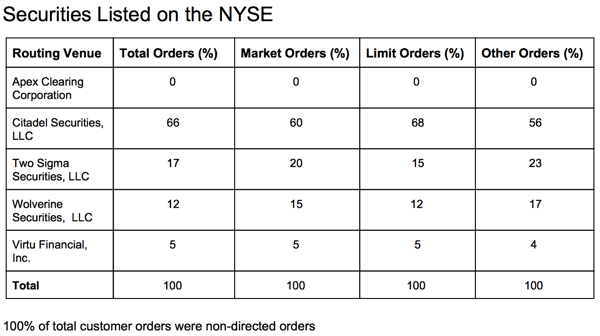
Honestly, I doubt it. Here’s the SEC Rule 606 Disclosure for Robinhood that shows where the orders are routed (source):

Yes, the names like Citadel and Virtu are well-known HFT firms. But Vanguard Brokerage doesn’t sell any order flow at all, yet most of their orders still go through Citadel (source):

Theory #2: Robinhood customers are broke and cheap, so they mostly trade a lot of stocks with low share prices. A lot of this argument is based on the amounts reported on the 606 disclosures. If you change the estimate for average share price traded to $4 a share, then Robinhood would get paid the same amount as the other firms. With zero commissions, anyone can afford to trade a few bucks of stock back and forth.

Theory #3: Robinhood’s order flow is somehow inherently more valuable than that of TD Ameritrade. Big brokers can fill some orders internally (one person is buying at the same time another is selling on the same platform) and they get to keep the market-maker profit. This rebuttal article says that Robinhood internalizes nothing and sells 100% of their orders. Maybe this “unfiltered” order flow is more valuable? Maybe the fact that their customers are younger and mostly non-professional traders make the order flow more valuable? More odd lots? More trades of single shares? More market orders instead of limit? Maybe Robinhood packages the data in some way that makes it more palatable to HFT firms?

HFT firms are using the data to build complex algorithms for their own trading, so they want to understand market behavior. Getting unlimited access to raw order data would certainly be key to understanding the behavior of “dumb money”.

Personally, I think it’s maybe a little #2, but more #3. Robinhood was founded by former HFT software engineers. They know exactly what type of information would be valuable to HFT firms. In fact, I think selling customer data (in aggregate) was a big part of their business model to pull off free trades from the very beginning. So they optimize the selling of your data quietly, while also making money on idle cash and margin subscriptions. It’s also a big money saver when they only answer customer service questions via e-mail and don’t have a phone number.

The bigger question: Do you care? Okay, so Robinhood gets paid by selling your order data. They get paid a penny per share. Some firm will know you bought 10 shares of Nvidia and sold 10 shares of AAPL exactly 54 minutes and 12 seconds after the new iPhone announcement. In some indirect way, this arrangement might give the HFT firms a greater trading edge in the future. In exchange, you get free stock trades today. Is this a bad deal?

They’ve also helped inspire more free trade competition:

Bottom line. I view Robinhood as “free” in the same way that Gmail is “free” and Facebook is “free”. They make money via traditional means, but your personal data and behavior patterns are also part of the true price. The theme of this entire decade is that our personal data is the most undervalued asset (by us). Google, Facebook, Amazon, Visa, every major corporation – they are perfectly aware of the value of data. As the saying goes, “If you’re not paying for the product, you are the product.”

Amazon Key In-Car Delivery: Free $10 Amazon Gift Card

Amazon wants to deliver packages directly into the trunk of your car. If you are an Amazon Prime member with a 2015 model year or newer Chevrolet, Buick, GMC, Cadillac, and Volvo vehicle, get a $10 Amazon Gift Card after your first Amazon Key In-Car Delivery order. Thanks to reader Bill for the tip.
With In-Car Delivery your Amazon packages are securely delivered right into your vehicle parked at home, at work or near other locations in your address book. Track your packages with real-time notification and get worry-free delivery at no extra cost, backed by the Amazon Key Happiness Guarantee.

You can also express your interest in adding Alexa to your car with Amazon Echo Auto. What will Amazon think of next?

Amex EveryDay® Credit Card: 10,000 Point Referral Offer, 0% APR on Purchases for 15 Months

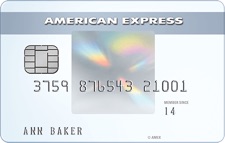
The Amex EveryDay® Credit Card is a great way to earn American Express Membership Rewards points with no annual fee. Right now, there is also a welcome bonus and no balance transfer fee offer for new cardholders. Here are the highlights:

  • 10,000 Membership Rewards Points welcome bonus after $1,000 in purchases in the first 3 months.
  • 0% intro APR for 15 months on purchases.
  • 2X points at US supermarkets on up to $6,000 per year in purchases (then 1X). 1X points on all other purchases.
  • 20% more points if you make 20 or more purchases in a billing period (less returns and credits).
  • No annual fee.

Note the following:

Welcome bonus offer not available to applicants who have or have had this product.

Earn Membership Rewards (MR) points with no annual fee. American Express has historically been a “premium”-only brand and most every card had an annual fee. This no-annual fee card is a move to welcome more consumers. In addition, if you have Membership Rewards points earned from other American Express cards, having this card would keep all of your MR points from expiring even if you closed those other cards (perhaps to avoid the annual fees). This way you keep the flexibility to transfer the points into a variety of airline miles or hotel points as needed. As there is no annual fee, I can keep this card open forever.

Membership Rewards points can be converted to the following airline miles (there are more, this is just a selection):

  • Delta SkyMiles
  • Hawaiian Airlines
  • ANA Mileage Club (partner of United Airlines)
  • Air Canada (partner of United Airlines)
  • British Airways (partner of American Airlines)
  • FlyingBlue (Air France/KLM)
  • Virgin Atlantic
  • Virgin America

With the 20% bonus for 20+ purchases per billing period, you would be getting 1.2 miles per dollar on all purchases and 2.4 miles per dollar at US supermarkets (up to $6,000 per year). A lot depends on how much value you can get out of those airline miles.

Unfortunately, there are many redemption options for Membership Rewards points that are worse than 1 cent per point value. Here are a few examples:

  • Shop with Membership Rewards Points (~0.5 cents per point)
  • Shop with Points at Amazon.com (~0.7 cents per point)
  • Use points at BestBuy.com (~0.7 cents per point)
  • Gift Cards (varies from 0.5 up to 1 cent per point max)

Bottom line. The Amex EveryDay® Credit Card allows you to earn and maintain Membership Rewards points with no annual fee. The welcome offer currently includes a 10,000 Membership Rewards points welcome bonus and 0% APR on purchases for 15 months.

Kindle E-Readers: Prime Sale + American Express Discount = $9.99 Kindle?

Amazon is having two separate promotions on Kindle e-Readers that can stack together to result in a $10 Kindle. This was a great opportunity to upgrade from my ancient 2nd generation Kindle. First, all Amazon Prime members have the special Kindle prices below ($30 to $40 off):
Amazon Prime members who have also have a linked American Express card with Membership Rewards linked may be eligible for an additional $30 to $40 off discount:

Cardholders of an American Express card with Membership Rewards should also check again to see if they are eligible for this targeted $30 off any $60 purchase promotion when you use as little as 1 Membership Rewards point. You may even be able to get it a second time. The items must be shipped and sold by Amazon.

There have been some pretty solid American Express + Amazon offers recently. Here are my two favorite cards that earn Membership Rewards with no annual fee, one consumer and one business:

Big List of Ways To Protect Your Identity: Free Credit Monitoring, Free Credit Locks, and Free Credit Freezes

eq_hack

Updated. After the Equifax hack and many subsequent hacks that affected so many Americans, there is renewed interest in the various ways you can monitor and/or protect your credit report. Below is a summary of the options available.

Free credit reports. Everyone should take advantage of the free copy of their credit reports (Equifax, Experian, TransUnion) and their bank report (ChexSystems, TeleCheck) available every 12 months. I would also add LexisNexis to the ones I personally check. This free access is mandated by the government. Here again is my Big List of Free Consumer Reports.

Free credit monitoring. There are many offers nowadays for free credit scores and partial snapshots of your credit report. These are provided by private services, either in partnership with or as a subsidiary of the major credit bureaus. In addition, some offer credit monitoring, where they will e-mail or text you when a significant change occurs (new accounts, etc). I choose to take advantage of this, knowing it is in exchange for some ads. Here’s a recipe for credit monitoring coverage across all three major bureaus:

Free credit locks. The credit bureaus now have a feature that allows you to instantly “lock” and “unlock” the credit report of a specific credit bureau and thus prevent access. These are nice because you can unlock it for a day or so when you need, but otherwise keep it locked. Again, if they are free, they are probably supported by ads and/or upgrades (which is fine by me, I just decline the occasional upsell and it stays free).

Free Fraud Alerts. If you are concerned that your personal information is compromised (you should be!), you can contact any one of the three major credit bureaus and ask for a “Fraud Alert” to be placed on your credit report. This supposedly lets all potential creditors know that you are at high risk and that they need to do extra identity verification. Be sure that they have your current contact information as they will call you every time someone tries to check your credit report.

(Update: I’ve had a Fraud Alert on my account for over 12 months now, and I have not seen any special precautions taken despite applying for multiple credit cards during that time. No verification phone calls, no snail mail letters, etc. I wouldn’t depend on a Fraud Alert to stop any criminal activities.)

This is free of charge. It will expire automatically after 1 year but you can call in and renew by submitting a new request within 30 days of your current alert expiring. If you are a documented victim of identity theft, you can ask for an Extended Fraud Alert of up to 7 years. By law, you should only need to contact one of them, and they are supposed to contact the other two companies and thus have the Fraud Alert active on all three accounts. Taken from FTC.gov:

Credit Freezes. This is the most comprehensive measure to take. Once you initiate a credit freeze, it will stay on there permanently in most states (or at least 7 years in others). In order for a business to check your credit report, you must manually “unfreeze” your credit temporarily. As of 9/21/18, this should be free by law at all three credit bureaus. You must contact each credit bureau separately.

In addition, the same law requires that free credit freezes also be made available for children under 16 years old. (I would warn folks that you have to send in multiple sensitive personal documents like birth certificate and possibly notarized forms to verify your kids’ identities. Makes sense but a lot of work.)

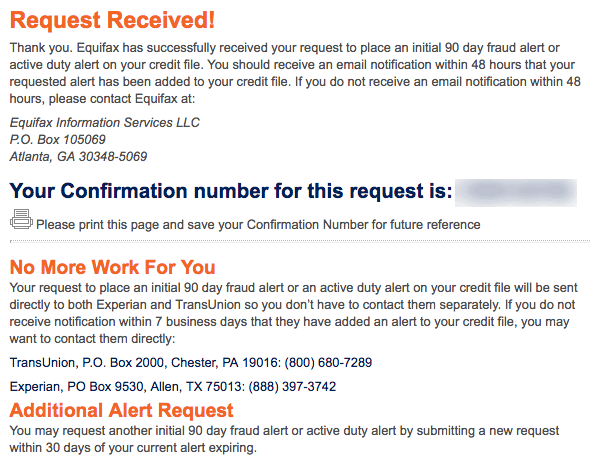
I decided to initiate a free 90-Day Fraud Alert to try it out (through Equifax since they should do the extra work).

eqalert_sample

I already access my credit reports/ChexSystems/LexisNexis every 12 months, and I continuously monitor my own credit using the services listed above. Here’s a sample free alert I got from CreditKarma:

ck_sample

I then cross-referenced with a similar free credit monitoring alert from CreditSesame (TransUnion) that included more info like date and card issuer:

cs_sample

Bottom line. That’s the menu; I would start at the top and pick what works for you. I tend to open a relatively high number of credit and bank accounts throughout the year, often for a time-senstive promotion, so I choose to decline the extra hassle and cost that comes with a credit freeze. I use the free monitoring services listed above instead to get an e-mail whenever a new credit check occurs or a new line of credit is reported. If you rarely get new accounts or simply feel otherwise, go more extreme.