Free Google Mini for Spotify Premium Users ($9.99/Month)

Spotify Premium paid subscribers (both new and existing) can get a free Google Mini smart speaker. New subscribers can join Individual for $9.99 a month or Family for $14.99 per month and get a free promo code. There is no minimum monthly commitment required.

Existing subscribers can register here to get their promo code for a free Google mini.

The music streaming wars continue. This comes right after the 99 cent Amazon Echo Dot + Music Unlimited promo.

Best Brokerage and IRA Transfer Bonuses – October 2019

Fidelity, Schwab, TD Ameritrade, E-Trade, Interactive Brokers, Ally Invest all now offer free stock trades. Vanguard offers free trades on all ETFs, not just their own. The new differentiators are things like user interface, customer service, and interest on cash sweep accounts. How about some cash in my pocket too?
The recent shake-up is a reminder brokers are transitioning to maximizing assets under management, as opposed to attracting traders that rack up those commissions. You can often get a cash bonus for switching teams, based on the size of assets that you move over. This usually involves an ACAT transfer of your securities, including tax cost basis history. Here’s a current list of the top brokerage transfer bonuses, along with some additional commentary on Fidelity and Vanguard.

Schwab

  • Link: Up to $2,500 bonus offer
  • $200 bonus for $50k, $300 for $100k, $600 for $250k, $1,200 for $500k, $2,500 for $1m+.
  • New or existing customers moving over new assets. Valid for retail brokerage accounts.
  • Make a qualifying net deposit of cash or securities within 45 days.
  • Maintain net deposit amount (less any market losses) for one year.

TD Ameritrade

  • Link: Up to $1,000 bonus offer
  • Note this matches or is better than their standard up to $600 offer.
  • $100 bonus for $25k, $200 for $50k, $500 for $100k, $1,000 for $250k+.
  • Valid for new taxable or IRA accounts.
  • Open by 1/30/20, funded with new funds or securities within 60 days.
  • Maintain net deposit amount (less any market losses) for 12 months.

Chase YouInvest + Sapphire Banking

  • Link: $1,000 Sapphire offer / Standard offer
  • Sapphire offer: New or existing customers. Brokerage and/or IRA. Must transfer a total of $75,000 or more in new money or securities into eligible Chase checking, savings and/or investment accounts. You must open a new Sapphire banking account by 11/19/2019, complete the $75k transfer within 45 days of opening, and maintain that balance for at least 90 days from the date of funding. Get $1,000 bonus.
  • Standard offer: $200 for $25k, $300 for $100k, $625 for $250k. Transfer within 45 days, maintain for 90 days.

Merrill Edge

  • Link: Up to $1,000 bonus offer / $900 Preferred Rewards offer / $600 Standard offer
  • $100 bonus for $20k, $250 for $50k, $500 for $100k, $1,000 for $200k+ in new assets to BofA/Merrill. If you have a lot more than $200k, you can call them at 888-637-3343 for a custom offer.
  • Expires October 17, 2019. This is a special link that is more than the standard offer. The page says “This limited time offer is valid only for MoneyShow attendees.” but reports of enforcement vary. If they do enforce, you may have to provide proof of attendance to San Francisco Money Show or accept the standard bonus amount.
  • Up to 100 free trades per month with Bank of America Preferred Rewards program.
  • Valid for new IRA or retail brokerage accounts (CMA).
  • Make a qualifying net deposit of cash or securities within 45 days.
  • Maintain net deposit amount (less any market losses) for 180 days.

E-Trade

  • Link: Up to $2,500 bonus offer
  • $200 bonus for $25k, $300 for $100k, $600 for $250k, $1,200 for $500k, $2,500 for $1m+.
  • New non-retirement brokerage accounts only.
  • Open by 12/31/19, funded with new funds or securities within 60 days.
  • Maintain net deposit amount (less any market losses) for 6 months.

Ally Invest

  • Link: Up to $3,500 bonus offer
  • $50 bonus for $10k, $200 for $25k, $300 for $100k, $600 for $250k, $1,200 for $500k, $2,500 for $1m, $3,500 for $2m+.
  • New non-retirement brokerage accounts only. (You must not have closed an account within the last 90 days.)
  • Open by 12/31/19, funded with new funds or securities within 60 days.
  • Maintain net deposit amount (less any market losses) for 300 days past bonus deposit (~370 days after opening).

Fidelity

  • Fidelity used to offer a variety of transfer bonuses, but they didn’t do a good job of curbing abuse and some folks got multiple bonuses without actually bringing in new money. Right now, I can’t find any transfer bonus links. Instead, here are a few reasons why you might want to move your money to Fidelity anyway (you can try out the other brokers above and take their money for doing so first).
  • Fidelity does not sell equity order flow to market makers and high-frequency traders.
  • Fidelity offers a relatively competitive default cash sweep option. As of 10/10/19, the Vanguard Federal Money Market fund pays 1.90% SEC yield, the Fidelity Government Money Market fund pays 1.58% SEC yield, Schwab pays 0.12%, TD Ameritrade pays 0.01%, and E-Trade pays 0.01%.
  • Fidelity has a variety of in-house stock and bond mutual fund options, which trade with no transaction fee at Fidelity and now have no minimum purchase amounts.
  • In my experience, Fidelity has had the most knowledgable customer service reps.

Vanguard

  • Vanguard has never offered a transfer bonus, to my knowledge. Instead, here are a few reasons why you might want to move your money to Vanguard anyway (you can try out the other brokers above and take their money for doing so first).
  • Vanguard has the most competitive default cash sweep option. As of 10/10/19, the Vanguard Federal Money Market fund pays 1.90% SEC yield, the Fidelity Government Money Market fund pays 1.58% SEC yield, Schwab pays 0.12%, TD Ameritrade pays 0.01%, and E-Trade pays 0.01%. This may or may not matter to you, depending on your idle cash balances.
  • Vanguard does not offer free trades on all stocks, but they do offer free trades on 1,700+ ETFs from any provider. Vanguard is not really built for heavy traders of individual stocks.
  • Vanguard has a variety of in-house stock and bond mutual fund options, which trade with no transaction fee at Vanguard.

Transfer notes.

  • Many brokers will charge an “Outgoing ACAT fee” of $50 to $150 when you leave them. I recommend contacting your destination broker and asking them to reimburse you for this fee. If you qualify for one of these bonuses, your account is probably big enough for them to consider it. You may have to send them a statement showing the fee.
  • Before moving, I would download all your old statements and tax cost basis information to make sure it transfers over correctly.
  • An ACAT transfer can take a week or so to complete, so you won’t be able to make any sell transactions during that time.
  • Consider performing a “partial” ACAT transfer where you only move over specifically designated shares (ex. only all 455 shares of BRKB) if you wish to keep some of your original brokerage account open. I would still transfer over all shares of any specific ticker, so that the tax cost basis carries over neatly.

Robinhood’s New Savings Account is FDIC-Insured! 2.05% APY

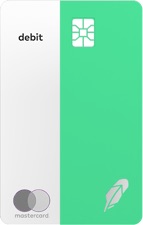
Robinhood brokerage has finally re-launched the high-interest cash sweep option after their failed (and illegal?) 2018 mash-up of checking accounts and SIPC-insurance. Robinhood Cash Management is basically what many other places like Betterment Savings have implemented, a FDIC-insured sweep account backed by a mix of different partner banks. The interest rate is variable and currently 2.05% APY as of 10/8/19. This is a pretty competitive rate when compared to other cash alternatives. Debit card has no fees on the Allpoint ATM network. Unfortunately, as is usual with Robinhood, you’ll have to join a long waitlist first.

This was an important move for Robinhood, as many of the established giants have joined the free stock trades party – Schwab, TD Ameritrade, E-Trade, Interactive Brokers, Ally Invest. However, not all of them offer competitive rates on idle cash. Schwab is notably bad in this regard. However, Schwab does offer well-trained humans and instant customer service via phone call. Robinhood has a slick app and user interface, but they don’t readily offer a phone number. Instead, you must wait around for a reply on their online messaging service. If I put a huge chunk of my net worth in a broker, I want a phone number.

So basically, there are free trades, high interest on idle cash, and good customer service. Which are the most important to you?

Best Interest Rates on Cash – October 2019

Here’s my monthly roundup of the best interest rates on cash for October 2019, roughly sorted from shortest to longest maturities. Rates are lower across the board due to the recent Fed rate cut. I track these rates because I keep a full 12 months of expenses as a cash cushion and also invest in longer-term CDs (often at lesser-known credit unions) when they yield more than bonds. Check out my Ultimate Rate-Chaser Calculator to get an idea of how much extra interest you’d earn if you are moving money between accounts. Rates listed are available to everyone nationwide. Rates checked as of 10/2/19.

High-yield savings accounts
While the huge megabanks like to get away with 0.01% APY, it’s easy to open a new “piggy-back” savings account and simply move some funds over from your existing checking account. The interest rates on savings accounts can drop at any time, so I prioritize banks with a history of competitive rates. Some banks will bait you and then lower the rates in the hopes that you are too lazy to leave.

Short-term guaranteed rates (1 year and under)
A common question is what to do with a big pile of cash that you’re waiting to deploy shortly (just sold your house, just sold your business, legal settlement, inheritance). My usual advice is to keep things simple and take your time. If not a savings account, then put it in a flexible short-term CD under the FDIC limits until you have a plan.

  • No Penalty CDs offer a fixed interest rate that can never go down, but you can still take out your money (once) without any fees if you want to use it elsewhere. Marcus Bank has a 7-month No Penalty CD at 2.10% APY with a $500 minimum deposit. CIT Bank has a 11-month No Penalty CD at 2.05% APY with a $1,000 minimum deposit. You may wish to open multiple CDs in smaller increments for more flexibility.
  • Total Direct Bank has a 12-month CD at 2.50% APY ($25,000 minimum) with an early withdrawal penalty of 3 months of interest. Navy Federal Credit Union has a special 9-month CD at 2.25% APY ($1,000 minimum), but you must have a military affiliation to join (includes being a relative of a veteran). Customers Bank has 2.25% APY ($25,000 minimum) on their liquid Ascent Money Market with a rate guarantee until 6/30/2020 (almost 10 months from today).

Money market mutual funds + Ultra-short bond ETFs
If you like to keep cash in a brokerage account, beware that many brokers pay out very little interest on their default cash sweep funds (and keep the difference for themselves). The following money market and ultra-short bond funds are not FDIC-insured, but may be a good option if you have idle cash and cheap/free commissions.

  • Vanguard Prime Money Market Fund currently pays an 2.00% SEC yield. The default sweep option is the Vanguard Federal Money Market Fund, which has an SEC yield of 1.94%. You can manually move the money over to Prime if you meet the $3,000 minimum investment.
  • Vanguard Ultra-Short-Term Bond Fund currently pays 2.16% SEC yield ($3,000 min) and 2.26% SEC Yield ($50,000 min). The average duration is ~1 year, so there is more interest rate risk.
  • The PIMCO Enhanced Short Maturity Active Bond ETF (MINT) has a 2.32% SEC yield and the iShares Short Maturity Bond ETF (NEAR) has a 2.36% SEC yield while holding a portfolio of investment-grade bonds with an average duration of ~6 months.

Treasury Bills and Ultra-short Treasury ETFs
Another option is to buy individual Treasury bills which come in a variety of maturities from 4-weeks to 52-weeks. You can also invest in ETFs that hold a rotating basket of short-term Treasury Bills for you, while charging a small management fee for doing so. T-bill interest is exempt from state and local income taxes.

  • You can build your own T-Bill ladder at TreasuryDirect.gov or via a brokerage account with a bond desk like Vanguard and Fidelity. Here are the current Treasury Bill rates. As of 10/1/19, a 4-week T-Bill had the equivalent of 1.79% annualized interest and a 52-week T-Bill had the equivalent of 1.74% annualized interest (!).
  • The Goldman Sachs Access Treasury 0-1 Year ETF (GBIL) has a 1.99% SEC yield and the SPDR Bloomberg Barclays 1-3 Month T-Bill ETF (BIL) has a 1.85% SEC yield. GBIL appears to have a slightly longer average maturity than BIL.

US Savings Bonds
Series I Savings Bonds offer rates that are linked to inflation and backed by the US government. You must hold them for at least a year. There are annual purchase limits. If you redeem them within 5 years there is a penalty of the last 3 months of interest.

  • “I Bonds” bought between May 2019 and October 2019 will earn a 1.90% rate for the first six months. The rate of the subsequent 6-month period will be based on inflation again. More info here.
  • In mid-October 2019, the CPI will be announced and you will have a short period where you will have a very close estimate of the rate for the next 12 months. I will have another post up at that time.

Prepaid Cards with Attached Savings Accounts
A small subset of prepaid debit cards have an “attached” FDIC-insured savings account with exceptionally high interest rates. The negatives are that balances are capped, and there are many fees that you must be careful to avoid (lest they eat up your interest). Some folks don’t mind the extra work and attention required, while others do. There is a long list of previous offers that have already disappeared with little notice. I don’t personally recommend nor use any of these anymore.

  • The only notable card left in this category is Mango Money at 6% APY on up to $2,500, but there are many hoops to jump through. Requirements include $1,500+ in “signature” purchases and a minimum balance of $25.00 at the end of the month.

Rewards checking accounts
These unique checking accounts pay above-average interest rates, but with unique risks. You have to jump through certain hoops, and if you make a mistake you won’t earn any interest for that month. Some folks don’t mind the extra work and attention required, while others do. Rates can also drop to near-zero quickly, leaving a “bait-and-switch” feeling. I don’t use any of these anymore, but the Orion offer is worth consideration.

  • Orion FCU Premium Checking has 4.00% APY on balances up to $30,000 if you meet make $500+ in direct deposits and 8 debit card “signature” purchases each month. Consumers Credit Union Free Rewards Checking has up to 5.09% APY on balances up to $10,000 if you meet make $500+ in ACH deposits, 12 debit card “signature” purchases, and spend $1,000 on their credit card each month. Find a locally-restricted rewards checking account at DepositAccounts.
  • If you’re looking for a high-interest checking account without debit card transaction requirements then the rate won’t be as high, but take a look at MemoryBank at 1.15% APY.

Certificates of deposit (greater than 1 year)
CDs offer higher rates, but come with an early withdrawal penalty. By finding a bank CD with a reasonable early withdrawal penalty, you can enjoy higher rates but maintain access in a true emergency. Alternatively, consider building a CD ladder of different maturity lengths (ex. 1/2/3/4/5-years) such that you have access to part of the ladder each year, but your blended interest rate is higher than a savings account. When one CD matures, use that money to buy another 5-year CD to keep the ladder going. Some CDs also offer “add-ons” where you can deposit more funds if rates drop.

  • You could build a CD ladder at First National Bank of America at 2.70% APY for 5-year, 2.60% APY for 4-year, 2.55% APY for 3-year, 2.50% APY for 2-year, and 2.45% APY for 1-year.
  • 5-year CD rates have been dropping at many banks and credit unions, following the overall interest rate curve. A good rate is now about 3% APY, with Hiway Federal Credit Union offering 3.00% APY ($25,000 min) or 2.80% APY ($500 min) on a 5-year CD with an early withdrawal penalty of 12 months of interest. Anyone can join this credit union via partner organization Minnesota Recreation and Park Foundation ($10 fee).
  • Navy Federal Credit Union has a special 18-month cert at 2.60% APY ($1,000 minimum) and a 5-year cert at 3.00% APY, but you must have a military affiliation to join (includes being a relative of a veteran).
  • You can buy certificates of deposit via the bond desks of Vanguard and Fidelity. You may need an account to see the rates. These “brokered CDs” offer FDIC insurance and easy laddering, but they don’t come with predictable early withdrawal penalties. The rates are not competitive right now. Watch out for higher rates from callable CDs listed by Fidelity.

Longer-term Instruments
I’d use these with caution due to increased interest rate risk, but I still track them to see the rest of the current yield curve.

  • Willing to lock up your money for 10+ years? You can buy long-term certificates of deposit via the bond desks of Vanguard and Fidelity. These “brokered CDs” offer FDIC insurance, but they don’t come with predictable early withdrawal penalties. As of this writing, I am seeing no inventory on 7-year and 10-year CDs. Watch out for higher rates from callable CDs from Fidelity.
  • How about two decades? Series EE Savings Bonds are not indexed to inflation, but they have a unique guarantee that the value will double in value in 20 years, which equals a guaranteed return of 3.5% a year. However, if you don’t hold for that long, you’ll be stuck with the normal rate which is quite low (currently a sad 0.10% rate). I view this as a huge early withdrawal penalty. You could also view it as a hedge against prolonged deflation, but only if you can hold on for 20 years. As of 10/2/19, the 20-year Treasury Bond rate was 1.90%.

All rates were checked as of 10/2/19.

Fidelity, Schwab, TD Ameritrade, E-Trade, and Interactive Brokers Now All With $0 Stock, ETF, and Options Trades

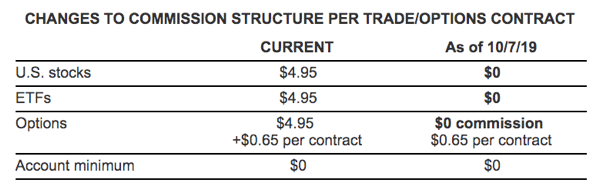
Update: Fidelity, Schwab, TD Ameritrade, E-Trade, Interactive Brokers, Ally Invest all now offer free stock trades. The new differentiators are things like user interface, customer service, and interest on cash sweep accounts.

Original post:

Schwab just announced the elimination of online commissions for stocks, ETFs and options listed on U.S. or Canadian exchanges as of 10/7/19 (press release). TD Ameritrade responded later the same day by matching that pricing as of 10/3/19. This will affect retail customers and also the many folks who have their portfolio run by financial advisors that use Schwab and TD Ameritrade as custodians. This could also be hard news for the feisty little guys who went there first like Robinhood, Webull, and Firstrade.

Commissions have dropped gradually for a long time, but it was still bringing in hundreds of millions of dollars to these publicly-traded corporations. That said, commissions only made up about 4% of Schwab’s net revenue. TD Ameritrade’s move was more surprising since commissions make up about 16% of their net revenue (they historically have a bigger focus on heavy traders).

I would note that TD Ameritrade and Schwab will likely keep making millions of dollars by accepting payment for order flow. This fact was always brought up with the startups that offered free trades first, but I have yet to see any hard evidence that individual investors are significantly harmed by this practice. The payments work out to about 1/10th of a cent per share traded.

I would worry more about them making money off the interest on your cash sweep. Schwab’s FDIC-insured cash sweep pays a sad 0.12% APY on all balances under $1,000,000 as of 10/1/19. TD Ameritrade’s FDIC-insured cash sweep pays a sad 0.01% APY on all balances under $25,000 as of 10/1/19.

The bigger picture here is the move away from trading and towards portfolio management and financial advice. More and more individual investors are saving in their 401ks and IRAs and such towards a million-dollar portfolio instead of traditional pensions (that were also worth a million or more, you just didn’t notice because it gave you $3,000 a month forever instead). The result is a huge fight over the trillions of dollars up for grabs, and it looks like free trades and low-cost ETF portfolio management are becoming standard equipment.

If everyone joins them at zero, the focus will move from pricing to things like customer service, convenience/user experience, and the cost to “upgrade” to more advanced components of financial advice. I actually look forward to that service-oriented competition more than this pricing war (I don’t trade much anyway). Brokers might also start expanding into new areas to replace those old stock trade profits.

Chase Sapphire Banking: $1,000 Bonus For New/Existing Customers ($75,000 Assets)

New bonus. Chase has a new $1,000 cash bonus offer if you upgrade to or open a new Sapphire Banking account. To qualify, you must transfer a total of $75,000 or more in new money or securities into eligible Chase checking, savings and/or investment accounts. You must open by 11/19/2019, complete the $75k transfer within 45 days of opening, and maintain that balance for at least 90 days from the date of funding. Chase will deposit the bonus into your new account within 10 business days after meeting the requirements.

Banks are trying to develop relationships with the “might be rich in the future” crowd instead of only courting the “really rich”. Okay, the official term is “mass affluent”. Sapphire Banking is a new brand extension of their popular Chase Sapphire line of credit cards, although you don’t need to have one to open this account.

Sapphire Banking details. This is a “premium” checking account for those that can keep $75,000 in deposits or investments in qualifying Chase accounts. If you have less than $75k in assets, then a $25 monthly fee applies. Sapphire Banking perks include:

  • No ATM fees, including rebates on fees charged by non-Chase ATMs.
  • No fees for foreign exchange (ATM/debit), outgoing wire transfers, or stop payments.
  • No fees on the first four overdrafts within 12 months.
  • Free online stock and ETF trades with You Invest by JP Morgan.
  • Access to Sapphire lounges at concerts, sports and special events, early ticket sales and premium seats.
  • $0 monthly service fee on a linked Chase Total Business Checking account.

Moving over ETFs, mutual funds, and stocks. Since investments count towards the $75,000 requirement, if you have that much in ETFs, mutual funds, or stocks at another broker, you could perform an in-kind ACAT transfer over to their discount brokerage firm You Invest. All of your tax basis information should also move over seamlessly these days. Your old broker may charge you an outgoing ACAT fee about about $75, although you might ask You Invest if they will reimburse you for this fee. This would let you avoid parking $75,000 at Chase earning nearly zero interest (okay, it’s 0.01% APY). Losing out on 2% interest on $75k works out to a rate of $125 interest per month ($1,500 per year).

Alternatively, you could move over some cash and then invest in something similar to cash. I’m not sure if You Invest will let you buy individual US Treasury bills or brokered CDs. If not, you might also consider ultra-short bond ETFs like MINT or Treasury Bill ETFs like BIL.

Bonus math. Let’s say they want you to keep your $75k there for 90 days and to be safe you keep it there for another 10 business days until you see the bonus. Let’s make that 120 total days to be conservative. Earning $1,000 over 120 days on a $75,000 balance is ~4% annualized. This is on top of any other return from your investments (T-Bill interest, etc).

This is about the highest bonus that I have seen on this account, which is good because you can only get it once per 12 month period. This includes the You Invest bonus, which would only give you $200 right now if you transferred in under $100,000. The bonus will be reported on a 1099-INT:

You can only participate in one Chase Private Client CheckingSM, Chase SapphireSM Checking or You InvestSM new money bonus in a 12 month period. Coupon is good for one time use and only one bonus per account. Bonus is considered interest and will be reported on IRS Form 1099-INT (or Form 1042-S, if applicable).

Bottom line. Chase Bank has a premium checking account tier called Sapphire Banking, targeted at the “mass affluent”. There is a new account bonus of $1,000 for both new and existing Chase bank customers if you move over $75,000 in cash and/or investment assets.

Capital One Walmart Rewards Mastercard Review: 5% Back, But With Restrictions

Today, Walmart launched their new Capital One Walmart Rewards Mastercard (credit card) and Walmart Rewards Card (store card that only works at Walmart). Here are the highlights, which unfortunately include some hoops and hurdles to jump through.

  • Intro offer: 5% back at Walmart in-store when using Walmart Pay during the first 12 months.
  • 5% back on purchases at Walmart.com and Walmart app (includes Walmart Grocery Pickup and Delivery).
  • 2% back on Walmart purchases in stores after the introductory offer.
  • 2% back on restaurants and travel.
  • 1% back on all other purchases.
  • No foreign transaction fee.
  • No annual fee.

You can redeem your rewards during online checkout at Walmart.com, for recent purchases, and statement credits. (Gift cards and travel are listed as options too, but why would you choose that over cash unless they offer some sort of bonus?)

The only long-lasting benefit is the 5% back at Walmart.com and Walmart app (includes Walmart Grocery Pickup and Delivery). If you spent $1,000 a year at Walmart.com, then that’ll get you $50 in cashback. I might spend that much at Walmart in-store over a year, but definitely not Walmart.com at this time. If they released Walmart’s in-store sales volume compared to their online sales, I think you’d see a large disparity.

I was disappointed to see that 5% back in-store only works (1) if you remember to set up and use their Walmart iOS or Andriod app and (2) it only lasts for the first 12 months. After a year, it’s back down to only 2% back on Walmart purchases which really isn’t very appealing with multiple 2% cash back on everything alternatives. Did they not realize that nobody liked their old Synchrony card because it only offered a super-sad 1% back at Walmart stores?

Why is Walmart so stingy with the cash back? Perhaps Walmart’s profit margins are too slim to match Target REDcard’s 5% cash back on both in-store and online purchases. I suppose you could see that as a good thing. But still, it gives me little reason to get this card. Costco only offers 2% back via their self-branded credit card, but at least throws in 4% back on gas and 3% back on travel and restaurants. Meanwhile, Amazon offers 5% back if you have Prime and includes Whole Foods purchases.

Bottom line. Walmart has a new co-branded credit card. The only long-lasting benefit is the 5% back at Walmart.com and Walmart app (includes Walmart Grocery Pickup and Delivery). It’s not very good any place outside of Walmart, and not even especially good at Walmart stores after the first year. If Walmart.com steps up their game to include better delivery options, perhaps it will be worth a second look.

Firefox Private Network: Free Browser-Based VPN Encryption During Beta

If you’re like me, you take advantage of all the free WiFi you can get to avoid having to pay too much for a big cellular data plan. Coffee shops, airports, libraries, hotels, conference centers, etc. The problem is that (as Mozilla puts it) if a “Wi-Fi connection is free and open to you, it’s also free and open to hackers”. The solution to this problem is to use a Virtual Private Network (VPN) that acts like a secure “tunnel” between you and the service you are reaching. The VPN tunnel keeps other folks from peeking in on your e-mail passwords, website visits, exact location, and so forth.

Firefox promotes itself as a privacy-focused web browser alternative, and its newest feature is called Firefox Private Network, which bakes VPN encryption into the browser itself. While it is in beta testing, this feature is free to all Firefox for desktop users in the United States. They do plan on charging for it at some point in the future. However, I think this presents a good opportunity for more people to become more familiar with using a VPN and see that it isn’t very complicated.

While I don’t necessarily feel everyone “needs” a VPN, I have used one myself for many years. Even if I only occasionally work in public spaces with shady WiFi, I figure that paying a few bucks a month is worth avoid a bigger cellular data plan and it allows me to connect to that free airport WiFi with peace of mind. Some people use a VPN 24/7 as they don’t want Comcast/Spectrum/AT&T/Verizon collecting their internet data either.

I’m not a VPN expert, but I switched to NordVPN about a year ago because their “no logs” policy was audited (VPN reviews are a mess in general) and a 3-year subscription cost only $3.49/month. I switched from Encrypt.me, which also worked fine but it costs a lot more at $10 a month or $99 a year. Other options: The winner of a Lifehacker poll was Private Internet Access. The Wirecutter picked TunnelBear. (NordVPN, TunnelBear, and PIA are affiliate links, Encrypt.me and Firefox PN are not.)

If you use a traditional VPN service (not the Firefox version), they usually allow you to change your IP address location so that for example you can use Netflix even when you travel temporarily internationally. It also helps me do some website testing as I can see how different sites load if I was visiting from Europe, Asia, etc. Which reminds me, if you are self-employed or run your own business, a VPN can be a worthwhile tax-deductible business expense.

NetNewsWire 5.0: Free RSS Reader for Mac

If you like things old-school and still follow blogs and news sites using RSS feeds, you may be interested to know that the NetNewsWire RSS reader name has gone back to its original creator and there is a new version now available as a free, open source download for Mac OS X 10.14.4 or newer. Since the demise of Google Reader, I know that many people have switched to Feedly, but I have been a paying user of NetNewsWire for a long time.

By the way, here is the raw My Money Blog RSS feed URL.

Walmart / Target Car Seat Trade-In Events: $30 Gift Card / 20% Off Discount

Got an old car seat that you don’t use anymore? Need a bigger one? Both Walmart and Target are running car seat trade-in events this month in celebration of National Baby Safety Month. This is a good option for those with expired car seats (they eventually expire as the foam and plastic breaks down over time) or ones that have been in any sort of accident and are thus not longer safe. All car seats made after 2009 should be marked with an expiration date by the manufacturer.

Walmart Car Seat Recycling Event is running September 16th-30th, 2019. Customers can trade in used car seat from any brand and in any condition to any participating Walmart store and receive a $30 Walmart gift card. Booster seats are not eligible for this offer. Limit 2 trade-ins per household. The car seats will be recycled through TerraCycle and thus avoid the landfill. Find a participating store and more details here and here.

Target Car Seat Trade-in Event is running September 3rd-13th, 2019. Bring your car seat to Guest Services and get a coupon for 20% off a new car seat, stroller or select baby gear (includes playards, high chairs, swings, rockers & bouncers). The coupon is valid through September 14, 2019. Target will accept and recycle all types of car seats, including infant seats, convertible seats, car seat bases, harness or booster car seats and car seats that are expired or damaged. Materials from the old car seats will be recycled by Target’s partner, Waste Management. More details here and here.

If you’re looking for some suggestions, check out my list of Favorite Baby Gear: This Stuff Survived 3 Kids in 6 Years

Best Interest Rates on Cash – September 2019

Here’s my monthly roundup of the best interest rates on cash for September 2019, roughly sorted from shortest to longest maturities. I track these rates because I keep a full 12 months of expenses as a cash cushion and also invest in longer-term CDs (often at lesser-known credit unions) when they yield more than bonds. Check out my Ultimate Rate-Chaser Calculator to get an idea of how much extra interest you’d earn if you are moving money between accounts. Rates listed are available to everyone nationwide. Rates checked as of 9/3/19.

High-yield savings accounts
While the huge megabanks like to get away with 0.01% APY, it’s easy to open a new “piggy-back” savings account and simply move some funds over from your existing checking account. The interest rates on savings accounts can drop at any time, so I prioritize banks with a history of competitive rates. Some banks will bait you and then lower the rates in the hopes that you are too lazy to leave.

Short-term guaranteed rates (1 year and under)
A common question is what to do with a big pile of cash that you’re waiting to deploy shortly (just sold your house, just sold your business, legal settlement, inheritance). My usual advice is to keep things simple and take your time. If not a savings account, then put it in a flexible short-term CD under the FDIC limits until you have a plan.

  • No Penalty CDs offer a fixed interest rate that can never go down, but you can still take out your money (once) without any fees if you want to use it elsewhere. Marcus Bank has a 7-month No Penalty CD at 2.25% APY and a 11-month No Penalty CD at 2.20% APY with a $500 minimum deposit. Ally Bank has a 11-month No Penalty CD at 2.20% APY with a $25,000 minimum deposit. You may wish to open multiple CDs in smaller increments for more flexibility.
  • Total Direct Bank has a 12-month CD at 2.60% APY ($25,000 minimum) with an early withdrawal penalty of 3 months of interest. Navy Federal Credit Union has a special 9-month CD at 2.50% APY ($1,000 minimum), but you must have a military affiliation to join (includes being a relative of a veteran).

Money market mutual funds + Ultra-short bond ETFs
If you like to keep cash in a brokerage account, beware that many brokers pay out very little interest on their default cash sweep funds (and keep the difference for themselves). The following money market and ultra-short bond funds are not FDIC-insured, but may be a good option if you have idle cash and cheap/free commissions.

  • Vanguard Prime Money Market Fund currently pays an 2.12% SEC yield. The default sweep option is the Vanguard Federal Money Market Fund, which has an SEC yield of 2.08%. You can manually move the money over to Prime if you meet the $3,000 minimum investment.
  • Vanguard Ultra-Short-Term Bond Fund currently pays 2.21% SEC yield ($3,000 min) and 2.31% SEC Yield ($50,000 min). The average duration is ~1 year, so there is more interest rate risk.
  • The PIMCO Enhanced Short Maturity Active Bond ETF (MINT) has a 2.40% SEC yield and the iShares Short Maturity Bond ETF (NEAR) has a 2.41% SEC yield while holding a portfolio of investment-grade bonds with an average duration of ~6 months.

Treasury Bills and Ultra-short Treasury ETFs
Another option is to buy individual Treasury bills which come in a variety of maturities from 4-weeks to 52-weeks. You can also invest in ETFs that hold a rotating basket of short-term Treasury Bills for you, while charging a small management fee for doing so. T-bill interest is exempt from state and local income taxes.

  • You can build your own T-Bill ladder at TreasuryDirect.gov or via a brokerage account with a bond desk like Vanguard and Fidelity. Here are the current Treasury Bill rates. As of 9/3/19, a 4-week T-Bill had the equivalent of 2.07% annualized interest and a 52-week T-Bill had the equivalent of 1.74% annualized interest (!).
  • The Goldman Sachs Access Treasury 0-1 Year ETF (GBIL) has a 1.99% SEC yield and the SPDR Bloomberg Barclays 1-3 Month T-Bill ETF (BIL) has a 1.92% SEC yield. GBIL appears to have a slightly longer average maturity than BIL.

US Savings Bonds
Series I Savings Bonds offer rates that are linked to inflation and backed by the US government. You must hold them for at least a year. There are annual purchase limits. If you redeem them within 5 years there is a penalty of the last 3 months of interest.

  • “I Bonds” bought between May 2019 and October 2019 will earn a 1.90% rate for the first six months. The rate of the subsequent 6-month period will be based on inflation again. More info here.
  • In mid-October 2019, the CPI will be announced and you will have a short period where you will have a very close estimate of the rate for the next 12 months. I will have another post up at that time.

Prepaid Cards with Attached Savings Accounts
A small subset of prepaid debit cards have an “attached” FDIC-insured savings account with exceptionally high interest rates. The negatives are that balances are capped, and there are many fees that you must be careful to avoid (lest they eat up your interest). Some folks don’t mind the extra work and attention required, while others do. There is a long list of previous offers that have already disappeared with little notice. I don’t personally recommend nor use any of these anymore.

  • The only notable card left in this category is Mango Money at 6% APY on up to $2,500, but there are many hoops to jump through. Requirements include $1,500+ in “signature” purchases and a minimum balance of $25.00 at the end of the month.

Rewards checking accounts
These unique checking accounts pay above-average interest rates, but with unique risks. You have to jump through certain hoops, and if you make a mistake you won’t earn any interest for that month. Some folks don’t mind the extra work and attention required, while others do. Rates can also drop to near-zero quickly, leaving a “bait-and-switch” feeling. I don’t use any of these anymore, but the Orion offer is worth consideration.

  • The newest one is Orion FCU Premium Checking at 4.00% APY on balances up to $30,000 if you meet make $500+ in direct deposits and 8 debit card “signature” purchases each month. One has been around for while is the Consumers CU Free Rewards Checking at up to 5.09% APY on balances up to $10,000 if you meet make $500+ in ACH deposits, 12 debit card “signature” purchases, and spend $1,000 on their credit card each month. Find a locally-restricted rewards checking account at DepositAccounts.
  • If you’re looking for a high-interest checking account without debit card transaction requirements then the rate won’t be as high, but take a look at MemoryBank at 1.40% APY.

Certificates of deposit (greater than 1 year)
CDs offer higher rates, but come with an early withdrawal penalty. By finding a bank CD with a reasonable early withdrawal penalty, you can enjoy higher rates but maintain access in a true emergency. Alternatively, consider building a CD ladder of different maturity lengths (ex. 1/2/3/4/5-years) such that you have access to part of the ladder each year, but your blended interest rate is higher than a savings account. When one CD matures, use that money to buy another 5-year CD to keep the ladder going. Some CDs also offer “add-ons” where you can deposit more funds if rates drop.

  • You could build a CD ladder at First National Bank of America at 2.85% APY for 5-year, 2.75% APY for 4-year, 2.65% APY for 3-year, 2.60% APY for 2-year, and 2.50% APY for 1-year.
  • 5-year CD rates have been dropping at many banks and credit unions, following the overall interest rate curve. A good rate is now about 3.00% APY, with Commonwealth One Federal Credit Union offering a 5-year CD at 3.11% APY ($1,000 minimum) with an early withdrawal penalty of 180 days of interest. Higher rates with $50k an $100k deposits. Anyone can join this credit union via partner organization.
  • Navy Federal Credit Union has a special 18-month cert at 3.00% APY ($1,000 minimum) and a 5-year cert at 3.25% APY, but you must have a military affiliation to join (includes being a relative of a veteran).
  • You can buy certificates of deposit via the bond desks of Vanguard and Fidelity. You may need an account to see the rates. These “brokered CDs” offer FDIC insurance and easy laddering, but they don’t come with predictable early withdrawal penalties. The rates are not interesting right now. As of this writing, Vanguard is showing a 2-year non-callable CD at 1.80% APY. Watch out for higher rates from callable CDs listed by Fidelity.

Longer-term Instruments
I’d use these with caution due to increased interest rate risk, but I still track them to see the rest of the current yield curve.

  • Willing to lock up your money for 10+ years? You can buy long-term certificates of deposit via the bond desks of Vanguard and Fidelity. These “brokered CDs” offer FDIC insurance, but they don’t come with predictable early withdrawal penalties. As of this writing, I am seeing no inventory on 7-year and 10-year CDs. Watch out for higher rates from callable CDs from Fidelity.
  • How about two decades? Series EE Savings Bonds are not indexed to inflation, but they have a unique guarantee that the value will double in value in 20 years, which equals a guaranteed return of 3.5% a year. However, if you don’t hold for that long, you’ll be stuck with the normal rate which is quite low (currently a sad 0.10% rate). I view this as a huge early withdrawal penalty. However, you could also view it as a hedge against prolonged deflation, but only if you can hold on for 20 years. As of 9/3/19, the 20-year Treasury Bond rate was 1.77%.

All rates were checked as of 9/3/19.

Rewards Dining Programs and Avoiding Airline Miles Expiration Policies

stopwatch2

Updated + United Airlines miles no longer expire. I don’t fly as much anymore, and part of my routine to keep my various miles from expiring is to use dining rewards programs that give me miles for eating at participating restaurants. You link your existing credit card first, then pay with that credit card, that’s it – their system figures it out with no coupons, apps, or membership card required. Not all the food spots are great (this is basically paid advertising and the best places don’t need to advertise) but there is usually a small overlap between participating merchants and places I eat at anyway.

My $10 lunch fills the stomach and resets the clock on my mileage balance (although you could buy something as little as a $1 bottle of water). Most of the time, I don’t even have to think about it, but I also write the name of the restaurant and the airline on the card so I remember. Miles usually post within a few weeks. However, to be safe I try to make sure to make a purchase at least 2 months before the expiration date. (If it’s an emergency, I will do a transfer from Chase Ultimate Rewards, AmEx Membership Rewards, etc.)

Here are all the airline mileage and hotel programs along with their expiration policies. Most also offer a new member bonus. You can join each program and grab every bonus (one by one or simultaneously, if you have enough credit card numbers).

Alaska Airlines Mileage Plan

American Airlines AAdvantage

Delta SkyMiles

JetBlue TrueBlue

Southwest Airlines Rapid Rewards

Spirit Airlines

United Airlines MileagePlus

Hilton HHonors

International Hotel Group (IHG)

Each separately branded program can have multiple credit cards linked to it, but any single credit card can only be linked with one program. (In other words, you can’t earn miles on two airlines on the same purchase.) However, you can change the linked cards as often as you like via website. Delta, United, and JetBlue now all have points that don’t expire, so you can skip them if you wish.