Movies Anywhere: Sync 2 Accounts, Get 3 Free Movies

Movies Anywhere is running an anniversary promotion where you can get three free streaming movies for syncing two more accounts. The Martian, Happy Feet, and Fast and Furious 8. You can even get these free titles if you already have a 5 (add 1 more) or 6 (the max unless you have Xfinity) synced accounts. Note that the new links must occur by 11:59pm PST ON 12/27/18 to qualify. Details:

* Movies Anywhere users with four or less synced Digital Retailers as of 11 am PST on 11/07/18 must sync for the first time with one participating Digital Retailer to receive Happy Feet (2006, HD). Syncing for the first time with a second participating Digital Retailer required to receive The Martian (2015, HD) and The Fate of the Furious (2017, HD). Movies Anywhere users who have five synced Digital Retailers as of 11 am PST on 11/07/18 and sync for the first time with one additional participating Digital Retailer will receive all three eligible titles. ALL SYNCING MUST OCCUR BEFORE 11:59 PM PST ON 12/27/18. Users who have or had six synced Digital Retailers at any time between 10/10/17 and 11 am PST on 11/07/18 will receive a non-transferrable digital code with further instructions via their Movies Anywhere registered email, which can be redeemed for all three eligible titles.

Amazon: Buy $25 Starbucks Gift Card, Get $5 Amazon Credit

Here’s another quick Starbucks deal. Buy a $25 Starbucks Digital Gift Card (email delivery) and get a free $5 Amazon credit with the promo code SBUX. You should see the code accepted at checkout. Promo Credit is valid through and expires on February 15, 2019, 11:50 PM (PT). Limit one Promo Credit per customer/primary email address.

For a limited time, get a $5 Amazon promo credit when you buy at least $25 of select Starbucks Digital Gift Cards offered by ACI Gift Cards Inc., an Amazon company. Enter the code SBUX at checkout to receive special offer. One per customer. Enter code SBUX at checkout.

Hyundai $50 Test Drive Offer: Yes, It’s Both Legit AND Profitable For Hyundai

I was flipping through my Car and Driver magazine when I came across Why Getting Paid $50 to Test Drive a New Car Is Easier Than It Looks. Car manufacturers have offered gift cards for test drives off and on for years. I once test drove a Maserati and got a bunch of free Omaha steaks as well.

Yes, all you really have to do is walk in the dealership. Nearly every salesperson will simply let you have the gift card without a test drive if you tell them honestly that you just want the gift card. It’s simply the smartest use of their time. That’s exactly what the Car and Driver journalist found when he signed up for the Hyundai test drive offer. Right now, you can get a free $50 Visa prepaid card, $50 Amazon gift certificate, or $50 Target Gift Card.

The most interesting part of the article was these numbers from Hyundai:

Dean Evans, Hyundai Motor America’s chief marketing officer, says the gift-card offer has driven about 175,000 people to Hyundai dealerships. “We have been doing the program now nationally for about a year and a half. [It has] sold 76,000 cars. And we’ve had 500,000 people fill out the forms on in-market websites.”

Let’s crunch those numbers. 500,000 people provided Hyundai with their personal information (to be used for future marketing). 175,000 of those actually showed up in the dealership (and presumably got their $50.) The other 325,000 got nothing, but still gave up their info. 76,000 cars were sold as a result. That works out to $115 per sold car, plus they now have a huge marketing list for the future. Hey, that IS a good ROI compared to traditional advertising.

I think this is working out for Hyundai because their new cars appear a lot nicer in person than you might think and are significantly cheaper than the competing models from Hondas and Toyota. They just need to give people a little nudge to get in the door. I don’t think this is as likely to work out for “respected” brands like Audi or even Toyota. (You could argue about what corners are quietly being cut to get to that lower price – their Consumer Reports reliability ratings are lower than Toyota but higher than Nissan and Honda.)

Bottom line. If you are shopping around for a car, many places are offering $50 or more for a simple test drive. You really do get the free stuff just for walking into the dealership. But be careful, apparently nearly half of people who walk in for a free gift card, walk out with a new Hyundai!

Starbucks Gift Card Promo: Buy $10, Get $5 Free with Mastercard

sbux_cupBack again through 12/20. Here’s another Starbucks caffeine promo. Buy a $10+ Starbucks eGift Card with Masterpass, get a free $5 Starbuck eGift card. Masterpass is the online checkout system for Mastercard (like Visa and Visa Checkout).

Offer good through 12/20/18 or while supplies last. Limit 1 promotional eGift per person. Usually my wife and I both send each other a gift… If they run out of free codes, they usually will take down the offer page. However, if you’re interested I’d take advantage of this offer as soon as possible. Full terms.

You should see both the $10 gift card and bonus $5 gift card at checkout, while the total should be $10. If you see the Capital One Masterpass option only and your Mastercard is not with them, look for a link on the bottom labeled “Change Your Wallet”. Alternatively, try the process again in a new Incognito/Private window.

Robinhood (Not a) Checking Account 3% APY: SIPC Insurance Confusion


Update: Robinhood basically pulled the plug on the entire thing.

I don’t know who does PR for Robinhood, but they are good. I don’t ever recall this many media articles in a single day for a pseudo-checking account. Techcrunch, Barron’s, Business Insider, Bloomberg, USA Today, CNBC, Marketwatch… All coming the day after they deactivated some user accounts without notice and halted all options trading mid-day.

Robinhood announced a new Checking & Savings Cash Management account to expand their existing (required) brokerage account product. Robinhood is not a bank, and this account is not FDIC-insured. They did partner with Sutton Bank to provide a debit card, but deposits are not held at Sutton Bank. After reading through all their materials, here’s what is included:

  • 3% APY, subject to change at any time.
  • No minimum balance, no monthly fee, no overdrafts allowed.
  • ATM/Debit card with free access at 75,000+ ATMs (Allpoint and MoneyPass ATM networks). Only 4,000 of those ATMs accept deposits, and you are limited to depositing up to $1,000 per day and $5,000 per month.
  • “Pay bills, send and receive checks, transfer money, and set up direct deposit–all from the Robinhood app.”
  • “This process will not affect your credit score.” (I assume this means no credit check.)
  • No physical checkbooks. You request a check via app and they will send a physical check via USPS First Class mail the next business day. Limited to $2,500 per day and $10,000 total per month.
  • Mobile check deposit (take pictures on your smartphone) is limited to $2,500 per day and $10,000 total per month.

What does SIPC insurance mean? As with any other US brokerage account, Robinhood has SIPC insurance. This covers up to $500,000 by the SIPC in cash and securities, of which $250,000 can be in cash. SIPC does not cover changes in value to securities. However, you may be surprised to know that per the SIPC website, the following are considered securities:

  • Money market mutual funds.
  • Treasury bills and Treasury bonds.
  • Certificates of deposit.

Is your money earning 3% APY at Robinhood cash? securities? Robinhood is being rather vague about this. They say “we only use the safest assets, such as US treasuries”. Well, short-term US Treasuries are securities and they don’t even earn 3%. They call it a “cash management account”, but many cash management accounts have an FDIC-insured sweep (i.e. Fidelity CMA). Are they keeping it as pure “cash” and just crediting you money on the side somehow? Are they just creating another money market mutual fund? Money market mutual funds are securities, and tightly regulated ones, especially after 2008 when the Reserve Primary Fund did “break the buck”. Is the SIPC going to let them offer a loss-leader money market fund that pays out more interest than it earns?

(Update: The SIPC has some concerns.)

(Update 2: Looks like Robinhood got a phone call and they have to change the name from “Checking & Savings”. Seems like they will still try to work this in as a cash management account.)

In my opinion, if this is just a hyped-up money market mutual fund, the worst case scenario is that start-up Robinhood runs out of venture capital giving away free trades and crazy interest and both the brokerage fails and the money market fund has issues. This means you may not have access to your money for a while. The Reserve fund mentioned above gave back 99 cents on the dollar, but it took over a year (!) for all the money to be distributed. No interest was paid during that lost time. Following that history, you will probably get most of your cash back eventually (up to the limits) since money market mutual funds must only hold relatively safe assets. Then there is the hassle from losing potentially your primary checking account and all the bill payments, direct deposits, etc.

In contrast, I feel that the FDIC has a more streamlined process to handle bank failures. Several banks fail every year. As long as you are within the limits, you’ll get every last penny back. Nearly all of the time, another bank will take over the deposits immediately and your transactions will keep posting as usual.

I see a lot of internet comments that are either “OMG I’m moving all my money here!” or “OMG you’d be stupid to keep any money here!”. I’m in the middle. I am signing up on the waitlist (that’s my referral link so I move up the waitlist) since it’s free and will read through the application fine print when the dust settles. Right now, Robinhood is just in hype mode. By the time they actually start accepting money, 3% APY might not be all that special.

In any case, I don’t plan to move all of my money or my daily transactions over there. I just don’t trust them enough as a young start-up with barebones customer service that discourages phone calls. With all of the various deposit and withdrawal limits, I would definitely consider maintaining a full-service checking account somewhere else.

If you like how this sounds but don’t have a Robinhood brokerage account yet, you should get your free share of stock first since you need that opened first anyway. WeBull also offers new users free trades and a free share of stock.

Amazon Coupon Code: $5 off $20+ of Print Books

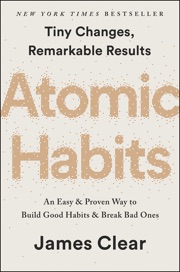
Amazon has a $5 off $20+ of print book purchases with promo code GIFTBOOK18. Can be one book or multiple. Offer expires at 11:59pm Pacific on December 21, 2018. Must be sold by Amazon.com. Here are some newer books that are on my to-read list. I’m on somewhat of a memoir kick.

Here are my standard suggestions for those looking to gift a financially-related book:

Big List of Kids Ski Free Passport Programs (3rd-6th Grade)

A friend of ours told us about the Colorado Ski Passport that lets 5th and graders from any state ski for free at several Colorado resorts, and I thought that was a great concept to promote this fun outdoor activity. If you can get even a single free lift ticket (and possibly even a free lesson with rentals), that can be a big savings these days. This led me to more digging and I found that several other states have similar programs.

I tried to find all of the state-wide programs and listed them below. I am excluding single-resort promotions, but many resorts do have family or kid specials where you get discounts if you stay for a certain number of hotel nights, etc.

Canada

Colorado

Idaho

Maine

  • Winterkids App (Annual membership is $35 for a family of 5 and includes “generous discounts” to kids 18 and under” in Maine and New Hampshire)

Michigan

Minnesota

  • Minnesota Ski Areas 4th Grade Passport (4th graders, unsure if limited to MN residents)

New Hampshire

New York

Pennsylvania

Utah

Vermont

Washington

Some programs do have capacity limitations and/or strict deadlines. If you know of any that I have missed, please let me know in the comments.

Expedia Activities: $30 off $40+ Coupon Code

Update: This offer has expired.

Expedia has a new coupon code THANKYOU which will get you $30 off $40+ in experiences booked through Expedia Activities. Officially it expires 12/31/18, but it will probably end early, and your activity has to occur by 12/31/18 anyway.

“Buy experiences, not things!” Well, you can book a lot of experiences on travel portals these days. Disney and Universal are excluded, but there are a lot of options in nearly every city. Here are some examples:

  • Zoo tickets
  • Escape Rooms
  • Legoland
  • Six Flags
  • Seaworld
  • Hop on Hop off Bus Tours
  • Fishing, Boat, Segway, or Helicopter Tours
  • Dinner Shows

How to use your coupon code:

During the booking process, on the payment page you will see the link ”Enter coupon code” where you can enter the coupon code.
Enter the coupon code in the relevant field and then click the “Apply Coupon” button. If your booking is eligible, the applicable discount will be subtracted from the price of the travel reservation before the application of any taxes, applicable fees or additional costs.

Best Interest Rates on Cash – December 2018

Here’s my monthly roundup of the best interest rates on cash for December 2018, roughly sorted from shortest to longest maturities. Check out my Ultimate Rate-Chaser Calculator to get an idea of how much extra interest you’d earn if you are moving money between accounts. Rates listed are available to everyone nationwide. Rates checked as of 12/3/18.

High-yield savings accounts
While the huge megabanks like to get away with 0.01% APY, getting higher rates is as easy as transferring money electronically from your checking account to an online savings account. The interest rates on savings accounts can drop at any time, so I prioritize banks with a history of competitive rates. Some banks will bait you and then lower the rates in the hopes that you are too lazy to leave.

Short-term guaranteed rates (1 year and under)
I am often asked what to do with a big wad of cash that you’re waiting to deploy shortly (just sold your house, just sold your business, legal settlement, inheritance). My usual advice is to keep things simple and take your time. If not a savings account, then put it in a flexible short-term CD under the FDIC limits until you have a plan.

  • No Penalty CDs offer a locked-in rate with no early withdrawal penalty. That means your interest rate can never go down, but you can still take out your money (once) if you want to use it elsewhere. Ally Bank 11-month No Penalty CD is at 2.25% APY for $25k+ balance, Marcus Bank 13-month No Penalty CD at 2.15% APY with a $500 minimum deposit, and the CIT Bank 11-Month No Penalty CD at 2.05% APY with a $1,000 minimum deposit. You may wish to open multiple CDs in smaller increments for more flexibility.
  • Live Oak Bank has a 1-year CD at 2.85% APY ($2,500 minimum) with an early withdrawal penalty of 90 days of interest.

Money market mutual funds + Ultra-short bond ETFs
If you like to keep cash in a brokerage account, beware that many brokers pay out very little interest on their default cash sweep funds (and keep the money for themselves). The following money market and ultra-short bond funds are not FDIC-insured, but may be a good option if you have idle cash and cheap/free commissions.

  • Vanguard Prime Money Market Fund currently pays an 2.30% SEC yield. The default sweep option is the Vanguard Federal Money Market Fund, which has an SEC yield of 2.19%. You can manually move the money over to Prime if you meet the $3,000 minimum investment.
  • Vanguard Ultra-Short-Term Bond Fund currently pays 2.64% SEC Yield ($3,000 min) and 2.74% SEC Yield ($50,000 min). The average duration is ~1 year, so there is a little more interest rate sensitivity.
  • The PIMCO Enhanced Short Maturity Active Bond ETF (MINT) has a 2.66% SEC yield and the iShares Short Maturity Bond ETF (NEAR) has a 2.75% SEC yield while holding a portfolio of investment-grade bonds with an average duration of ~6 months.

Treasury Bills and Ultra-short Treasury ETFs
Another option is to buy individual Treasury bills which come in a variety of maturities from 4-weeks to 52-weeks. You can also invest in ETFs that hold a rotating basket of short-term Treasury Bills for you, while charging a small management fee for doing so. T-Bill interest is exempt from state and local income taxes.

  • You can build your own T-Bill ladder at TreasuryDirect.gov or via a brokerage account with a bond desk like Vanguard and Fidelity. Here are the current Treasury Bill rates. As of 11/30/18, a 4-week T-Bill had the equivalent of 2.30% annualized interest and a 52-week T-Bill had the equivalent of 2.69% annualized interest.
  • The Goldman Sachs Access Treasury 0-1 Year ETF (GBIL) has a 2.18% SEC yield and the SPDR Bloomberg Barclays 1-3 Month T-Bill ETF (BIL) has a 2.07% SEC yield. GBIL appears to have a slightly longer average maturity than BIL.

US Savings Bonds
Series I Savings Bonds offer rates that are linked to inflation and backed by the US government. You must hold them for at least a year. There are annual purchase limits. If you redeem them within 5 years there is a penalty of the last 3 months of interest.

  • “I Bonds” bought between November 2018 and April 2019 will earn a 2.82% rate for the first six months. The rate of the subsequent 6-month period will be based on inflation again. More info here.
  • In mid-April 2019, the CPI will be announced and you will have a short period where you will have a very close estimate of the rate for the next 12 months. I will have another post up at that time.

Prepaid Cards with Attached Savings Accounts
A small subset of prepaid debit cards have an “attached” FDIC-insured savings account with exceptionally high interest rates. The negatives are that balances are capped, and there are many fees that you must be careful to avoid (lest they eat up your interest). Some folks don’t mind the extra work and attention required, while others do. There is a long list of previous offers that have already disappeared with little notice. I don’t use any of these anymore.

  • The only notable card left in this category is Mango Money at 6% APY on up to $2,500, but there are many hoops to jump through. Signature purchases of $1,500 or more and a minimum balance of $25.00 at the end of the month is needed to qualify for the 6.00%.

Rewards checking accounts
These unique checking accounts pay above-average interest rates, but with unique risks. You have to jump through certain hoops, and if you make a mistake you won’t earn any interest for that month. Some folks don’t mind the extra work and attention required, while others do. Rates can also drop to near-zero quickly, leaving a “bait-and-switch” feeling. I don’t use any of these anymore, either.

  • The best one left is Consumers Credit Union, which offers 3.09% to 5.09% APY on up to a $10k balance depending on your qualifying activity. The highest tier requires their credit card in addition to their debit card (other credit cards offer $500+ in sign-up bonuses). Keep your 12 debit purchases just above the $100 requirement, as for every $500 in monthly purchases you may be losing out on cash back rewards elsewhere. Find a local rewards checking account at DepositAccounts.
  • If you’re looking for a non-rewards high-yield checking account, MemoryBank has a checking account with no debit card requirements at 1.60% APY.

Certificates of deposit (greater than 1 year)
You might have larger balances, either because you are using CDs instead of bonds or you simply want a large cash reserves. By finding a bank CD with a reasonable early withdrawal penalty, you can enjoy higher rates but maintain access in a true emergency. Alternatively, consider building a CD ladder of different maturity lengths (ex. 1/2/3/4/5-years) such that you have access to part of the ladder each year, but your blended interest rate is higher than a savings account. When one CD matures, use that money to buy another 5-year CD.

  • Mutual One Bank has a 19-month CD at 3.04% APY ($500 min). 6 month early withdrawal penalty.
  • Greenwood Credit Union has a 5-year certificate at 3.75% APY ($1,000 min). Early withdrawal penalty is 6 months interest. United States Senate Federal Credit Union has a 5-year Share Certificate at 3.63% APY ($60k min), 3.57% APY ($20k min), or 3.51% APY ($1k min). Note that the early withdrawal penalty is a full year of interest. Anyone can join this credit union via American Consumer Council.
  • You can buy certificates of deposit via the bond desks of Vanguard and Fidelity. These “brokered CDs” offer FDIC insurance, but they don’t come with predictable fixed early withdrawal penalties. As of this writing, Vanguard is showing a 2-year non-callable CD at 3.10% APY and a 5-year non-callable CD at 3.55% APY. Watch out for higher rates from callable CDs listed by Fidelity.

Longer-term Instruments
I’d use these with caution due to increased interest rate risk, but I still track them to see the rest of the current yield curve.

  • Willing to lock up your money for 10+ years? You can buy long-term certificates of deposit via the bond desks of Vanguard and Fidelity. These “brokered CDs” offer FDIC insurance, but they don’t come with predictable fixed early withdrawal penalties. As of this writing, Vanguard is showing a 10-year non-callable CD at 3.60% APY. Watch out for higher rates from callable CDs from Fidelity. Matching the overall yield curve, current CD rates do not rise much higher as you extend beyond a 5-year maturity.
  • How about two decades? Series EE Savings Bonds are not indexed to inflation, but they have a guarantee that the value will double in value in 20 years, which equals a guaranteed return of 3.5% a year. However, if you don’t hold for that long, you’ll be stuck with the normal rate which is quite low (currently a sad 0.10% rate). I view this as a huge early withdrawal penalty. You could also view it as long-term bond and thus a hedge against deflation, but only if you can hold on for 20 years. As of 11/30/18, the 20-year Treasury Bond rate was 3.19%, so this EE bond is no longer offering a huge premium.

All rates were checked as of 12/3/18.


Frugal Holiday Greeting Cards: Custom Etsy Design + Costco Printing

If you like to send out holiday greeting cards, I thought I’d throw out a quick tip that Mrs. MMB uses each year to save a bit of money.
First, you can buy a custom digital design off of Etsy. Search for some combination of “photo Christmas card” or “holiday card template” and look for a design that you like. The prices and inclusions can vary, so click around. Ideally, you’ll find a template where you can customize both sides to your liking. For example, a Minted or Shutterfly template might force you to put exactly 3 pictures on the back. On Etsy, you can put 4, 5, or 6 if you want. If you have Photoshop skills, those are usually the cheapest, sometimes less than $5. You can usually opt to pay a few bucks more and they will edit it for you and provide a ready-to-go file. All-in cost: under $20.

Second, upload the digital file to Costco Premium printing at $0.69 each. Costco used to only do the cheaper “Photo Greeting Cards” that are basically just one-sided photos with nothing on the back, but now they do “Premium Stationery Greeting Cards” on heavyweight 5×7″ stock. (Some of their other stuff looks identical to Snapfish, so maybe these are outsourced to Snapfish as well?) However, their template options are still relatively limited. Note that the following is included in the $34.50 for 50 cards price ($0.69 each).

  • Free rounded corners
  • Free envelopes pre-printed with return address

If you compare to a site like Minted.com, their basic 5×7 card costs $167 for 100 cards ($1.67 each). On top of that, you would get charged additional for the following:

  • Rounded corners +$35
  • Envelopes pre-printed with return address +$45

That makes the total cost $247 for 100 cards ($2.47 each). There are usually some coupons, for example the Cyber Monday deal was 25% off, which would bring the price down to $185 for $100 ($1.85 each). Compared to Etsy + Costco, that’s still roughly a $100 price difference for every 100 cards.

Obviously there are even cheaper options (like not sending out cards or handwritten cards) but these types of cards are rather popular. I like this option because it’s actually more customized at less cost.

* Remember that you can save a bit extra on your Etsy purchases (or Minted, or many other sites) with cashback shopping sites like TopCashBack, eBates ($10 new user bonus after any $25+ purchase, $5 mininum cash-out), Mr. Rebates ($5 new user bonus, $10 minimum cash-out), and BeFrugal.com ($5 new user bonus).

IHG Rewards Club Instagram / Twitter Promo: 5,000 IHG Points For Sharing

IHG Rewards Club is giving away 5,000 IHG points if you do the following:

  1. Tweet or Instagram a picture of yourself at home or at any IHG® property using the hashtags #HomeWithIHG #ad and #Rewardsoffer and including the handle @IHGRewardsClub.
  2. Visit IHGRewardsClub.com/ClaimMyPoints by December 31, 2018 and sign in with the social account you used for your post. They recommend to wait 15 minutes after your tweet before doing this.
  3. Register with your IHG® Rewards Club Number to claim your 5,000 points.

Here are the full rules. You must have public profile (they are looking for publicity here…) and be one of the first 10,000 participants to get your 5,000 points. Seems pretty low effort and low risk if you already use these social media apps.

IHG Rewards Club is the loyalty program for Intercontinental Hotels, Crowne Plaza, Holiday Inn, Holiday Inn Express, Staybridge Suites, Candlewood Suites, Hotel Indigo, and EVEN Hotels. 5,000 IHG points is estimated to be worth roughly $30 towards a hotel night. They also have a discounted award night list called PointBreaks. You can also earn a lot more points with the Chase IHG Rewards Club Premier Card.

Giving Tuesday 2018: Double Your Impact

givingtuesdayTuesday, November 27th is Giving Tuesday 2018. This time of year is huge for charities, with 40% of donations occurring in the last six weeks of the year. Here are some ways you can “double your impact” with a matching donation.

Facebook Match(good toward any charity that accepts donations via Facebook). Starting at 8am Eastern on 11/27, Facebook and PayPal will match $7 million in donations to U.S. nonprofits – up to $250,000 per nonprofit and $20,000 per donor. Donations will be matched dollar for dollar on a first-come, first-served basis.

For example, give directly with the donate button on the The Humane Society Facebook Page. You can also start your own fundraiser here or simply post up a donate button to support your favorite charity.

Check for an employer match. Try this lookup tool from DoubleTheDonation. Most of these programs don’t require you to actually give on a specific day, but you may want to start the process today so you don’t forget in the holiday rush.

PayPal (good toward any charity participates in the PayPal Giving Fund). “Make a donation using PayPal on Tuesday, November 27, 2018 (Giving Tuesday) and we’ll match every donation that you make to PayPal Giving Fund (“Offer”), for the benefit of your recommended nonprofit dollar for dollar, up to $500,000 in total matching funds.” You must use your PayPal account. As far as I can tell, you can link up any rewards credit card of your choice and use that as the funding source. Your donation will technically be given to the PayPal Giving Fund, an IRS-registered 501(c)(3) nonprofit organization, and then disbursed to your selected nonprofit. It will still be tax-deductible to the extent allowed by law.

Individual charities. The following large charities have organized their own matches in the past, but check to make sure.

Check with your favorite community nonprofit. Many local charities may also have matching grants today.

Having trouble deciding where to give? Here are some charity comparison sites that will help you pick where to send your help.

  • CharityNavigator – Largest and well-publicized charity rating site, provides a 4-star rating based primarily on financial criteria.
  • GiveWell – Tries to identify the best charities, not rate them all. Focused primarily on charities working internationally
  • GreatNonProfits – Allows clients, volunteers, and funders to post personal reviews based on their experiences.
  • GuideStar – Tries to be a one-stop shop for both financial data and personal reviews of charities. Must register to see a lot of things, and pay a subscription fee for premium in-depth data.
  • Philanthropedia – Ranks non-profits based on opinions of experts, and groups them to mutual fund-like portfolios.