Morningstar Target Date Retirement Fund Report 2024: Highlights for DIY Investors

Morningstar recently released its 2024 Target-Date Strategy Landscape Report (free download with e-mail address). This is mostly targeted at industry professionals as opposed to individual investors, but I still like to read through it each year. Here are a few selected charts and quick takeaways from the report.

Our annual report on target-date strategies delves into the landscape by analyzing target-date flows, asset composition, fees, strategy performance, and more.

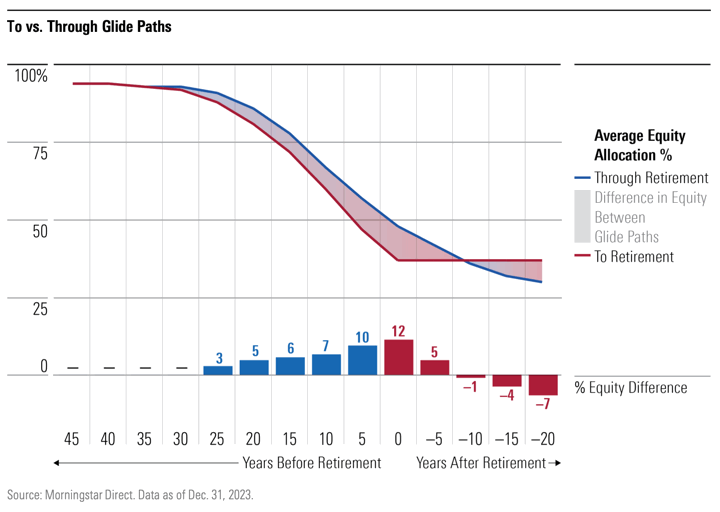
Average Asset Allocation Glide Paths. I always like to look at the average asset allocation glide path across all of the different TDFs. Morningstar now separates the them into “To Retirement” and “Through Retirement” types, depending on if they stop changing right at the retirement date or not. On average, most TDFs have an asset allocation close to 90% equity and 10% bonds in the early years, with the equity percentage dropping (and bond percentage rising) as time goes on. At the year of retirement, the average asset allocation is roughly 40% to 50% equity.
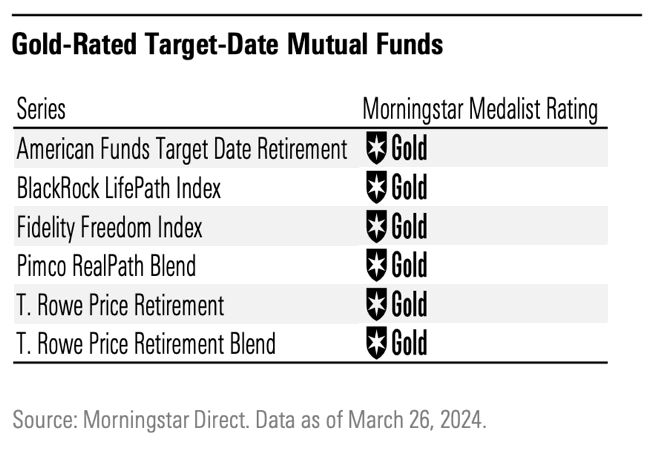
Here are all of the TDFs rated Gold by Morningstar. Vanguard, which is the largest by asset size, was rated Silver. Morningstar didn’t really explain very clearly why Vanguard only got Silver alongside some pretty mediocre funds like the original Fidelity Freedom series (not Freedom Index).
But really, the most important factor is whether you are invested and “in the game” or not. The differences between different TDFs are relatively small these days. Most of us can’t change the TDF series that is offered in our 401k plan. We can’t control the returns of those TDFs, either.

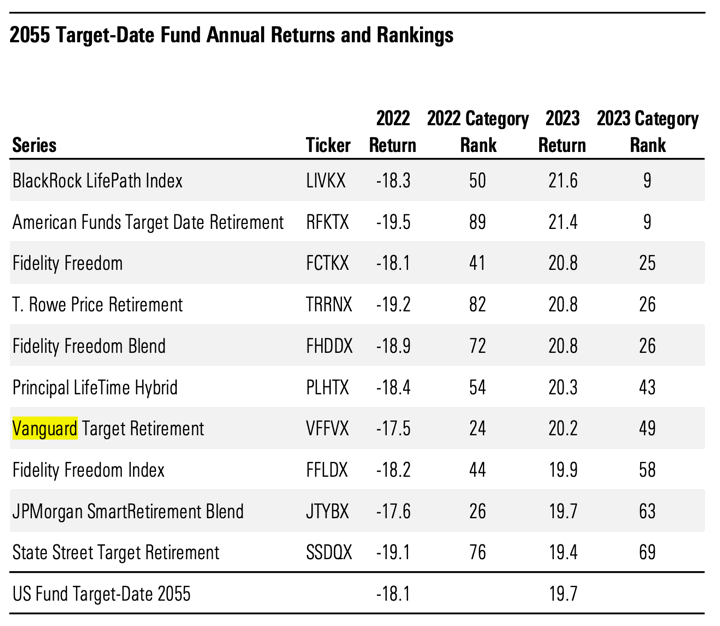
Here is a comparison of the returns from 2055 Target Date Funds (younger investors that have 30 years until retirement). I don’t see a huge dispersion in the returns. Higher is always preferred of course, but the same TDF that had returns ranked 89th one year was then ranked 9th the next year.
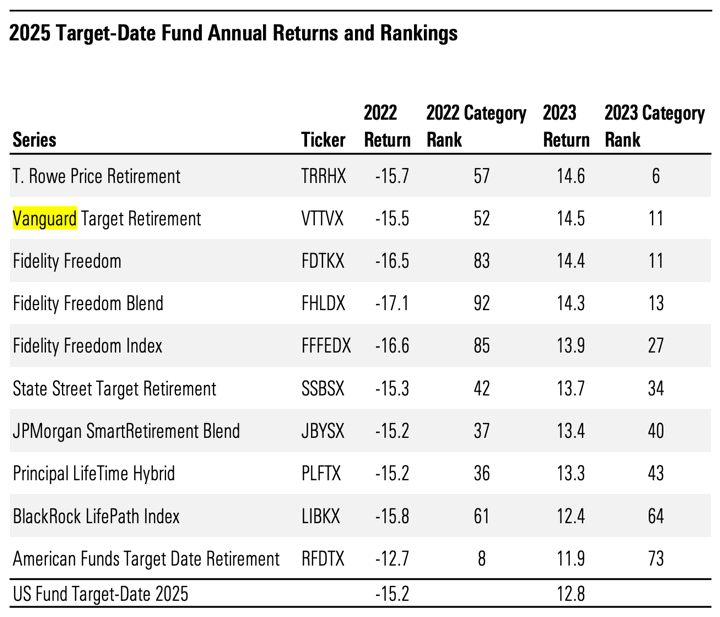
Here is a comparison of the returns from 2025 Target Date Funds (older investors very close to retirement). The same TDF that had returns ranked 83rd one year was ranked 11th the next year.
I remain a fan of TDFs in general. Most are good nowadays. As DIY investors, the most important decision is to participate in the stock market returns and try to maximize our contributions. The rest is much less important. Over the long run, TDFs have created a lot of wealth for consistent savers.

Berkshire Hathaway Asset Allocation: What’s Inside a Share of BRK.B?

Whether you are a Berkshire Hathaway shareholder or just curious about what Warren Buffett’s “masterpiece” looks like today, here is an interesting graphic from Sherwood News. Essentially, this is the asset allocation of BRK.B, broken down into wholly-owned operating businesses, shares of other publicly-traded companies, and cash (mostly Treasury Bills).

Some may be surprised to find that for every dollar you invest, this asset allocation is 70% into owning businesses and 30% into cash. Those that have tracked its history know that BRK has often had a significant cash pile relative to it’s total market cap. From Bloomberg (paywall):

There is also a bit of fuzziness as they own insurance companies and those insurance companies have roughly between $150 billion and $200 billion of float which can be invested (and considered an interest-free loan if the underwriting breaks even). Of course, this also means that Berkshire must be always be ready to pay out huge claims if certain events unfold.

The most recent discussion has focused on Buffett’s sale of half his Apple shares. I’m not really worried about it. As a shareholder, I have chosen to trust his management. When Buffett bought Apple stock, the P/E ratio was about 16. Today, Apple’s P/E ratio is over 32. Overall, the S&P 500 is also at higher P/E ratios relatively to historical averages. That makes these moves quite reasonable in terms of value investing.

Berkshire Hathaway makes up a very small percentage of my net worth, but remains a pseudo-actively-managed balanced fund with zero expense ratio that I love to watch. There are wholly-owned solid cash-spewing businesses. Shares of other solid cash-spewing businesses bought at fair prices. And just plain cash.

Savings Bonds: Converting Paper to Electronic at TreasuryDirect (My Experience)

After dealing with the estate of a family member, I saw firsthand the benefits of simplifying my financial situation. (They need a better term than “death cleaning“.) If not for me as I get older, definitely for my wife and/or kids in the future. This conflicts with my constant desire to try out new stuff and chase rates, but I’m working on it. Paper savings bonds are definitely something that could easily be lost or forgotten.

Even if they are found, there are vanishingly few banks that will redeem paper bonds anymore. Another option is to physically mail them in with FS Form 1522 and cash them out directly, but that requires a signature guarantee or notary. All more potential work for others.

My ultimate goal is to liquidate all of my savings bonds at TreasuryDirect and replace them with cash or TIPS (thus removing an account to track) in an existing brokerage account, but ideally in a manner sensitive to both the current interest rates being paid and my marginal income tax rate. It is also possible that I may use them for higher education expenses, which would be within the next 6 years.

Therefore, the best option seems to be to convert these paper bonds into electronic format at TreasuryDirect.gov, combining them with my existing electronic savings bonds, and then liquidating them as needed. The conversion process does not require a signature guarantee nor notary. Electronic bonds also provide the option of partial redemptions. The main risk is the hassle of lost paper bonds if something goes wrong in transit.

General conversion directions. Here are the conversion instructions directly from TreasuryDirect:

  1. Go to your TreasuryDirect account.
  2. Select ManageDirect.
  3. In the Manage My Linked Accounts menu, select Establish a Conversion Linked Account. If this option doesn’t appear, you have a Conversion Linked Account already. Skip to step 6 below.
  4. Review the information about conversion linked accounts.
  5. Select Create Account.
  6. In the Manage My Conversions menu, select How to Convert My Paper Bonds.
  7. Follow the instructions there.
  8. When you prepare your paper bonds to submit for conversion, do NOT sign the back of the bonds.

Basically, you have to enter the information on each of your paper savings bonds and they will create a numbered manifest with all of the bond data. You must send in your original paper savings bonds along with this signed manifest. Here is what you must certify with your signature:

By signing below:
1. I certify that I am requesting conversion of the listed savings bonds. I further certify that any bond not registered in my name was purchased by me as a gift to the bond’s registered owner.
2. I acknowledge and accept the terms and conditions set out in the regulations for TreasuryDirect at 31 CFR Part 363.
3. I understand that converted bonds are automatically redeemed upon final maturity and the interest reported to the IRS. I also understand that a Zero-Percent Certificate of Indebtedness (C of I) is
purchased with the redemption proceeds of the bonds.
4. I certify that all information provided is true, correct, and complete.

They state that you will not receive any notifications on the process, but you can check the status online:

You will not receive a notification when we receive the bonds or when the conversion process is complete. However, you may check the status of your bonds at any time, through your TreasuryDirect Conversion linked account. Click ManageDirect, then “View my manifests.” Select the manifest you wish to view and click the Select button. You will see one of the following notations in the Status column next to the bonds on your manifest:

In Progress – processing in progress;
Pending – Customer Service needs additional information;
Returned – Bond returned to you as ineligible for conversion;
Not received – Treasury did not receive the bond listed on the manifest;
Canceled – Bond closed in previous transaction. For example, a replacement bond was issued after being reported lost, stolen, or destroyed; or
Converted – Bond converted. Check your Current Holdings or Gift Box in My Converted Bonds Linked Account, or your Minor Linked Account.

My paper bond conversion timeline. I mailed them both in on July 17th, 2024 using USPS Priority and the default tracking number. . As they were titled in two different names, I sent them in two separate envelopes with two separate manifests. The tracking number confirmed basic delivery.

Roughly two weeks later on July 30th, 2024, I received the following e-mail confirmation, only for one of us (my wife). Apparently there are notifications after all? However, I never received any e-mail confirmation for myself for my own customer number. It’s possible that I overlooked it, but I did search my Junk and Spam folders. Here is the text of the e-mail.

Customer Number: XXXXXXX
Customer Name: Mrs. MMB
Case Number: 1-XXXXXXX

Dear Customer,

This is a system generated email to communicate we received your Savings Bonds/Treasury Marketable Securities materials.

Cases are worked in the order they are received in our office. Your request is important to us and will receive attention as soon as possible. Please be aware of our estimated processing times to process your case which are based on the case type:

Cases requesting to cash Series EE and/or Series I paper savings bonds held in your name, at least 4 weeks.
Cases requesting to cash Series HH savings bonds held in your name, at least 3 months.
Unlocking your TreasuryDirect account, updating bank information in that account, or converting your paper savings bonds into electronic bonds in TreasuryDirect, at least 4 weeks.
Claims for missing, lost, or stolen bonds, at least 6 months.
All other cases, at least 20 weeks.
If we require additional information to process your case, we will contact you. Thank you for your patience.

Please retain the Customer Number and Case Number referenced above to streamline any future actions associated with this request. Also note, you may receive multiple email notifications and Case Numbers depending on the type of transaction(s) you have requested.

If you have additional questions, please use the Contact Us link on TreasuryDirect.gov.

We appreciate your interest in U.S. Treasury securities.

Sincerely,
Treasury Services

Initially, I was a little concerned about my missing confirmation e-mail, but I figured there was nothing I could do until it was either processed or enough time had passed that I could claim it as lost. I told myself that there is a clear process to claim lost or stolen paper savings bonds using FS Form 1048, in case it came to that. I had made copies of everything in order to maintain a record of the serial numbers.

On August 14th, 2024 (two weeks later), I decided to log into my TreasuryDirect account to check on things. Given they stated “at least 4 weeks” above, I was surprised to find that all of the paper bonds (both my and my wife’s) showed in our respective “My Converted Bonds” account. You can also check the status of existing manifests under “ManageDirect” and then “Manifest Information” (screenshot at top of post).

So there you have it. As of later 2024, it took roughly two weeks to get receipt confirmation (maybe) and another two weeks (maybe) to process. Everything worked out in the end, and hopefully this information will help set some reasonable expectations for others.

p.s. I was able to add a new linked bank account using routing and account numbers with no additional security steps. Not even microdeposits. I don’t know if this is a good move overall, but I am personally glad to not have to hunt down a local bank branch that will grant me a medallion signature guarantee like they were requiring several years ago.

Vanguard How America Saves 2024: 401(k) Retirement Plan Stats

Vanguard recently released the 2024 edition of their annual How America Saves report, a detailed, 113-page report targeted at industry professionals which looks across millions of their 401k, 403b, and similar defined-contribution retirement plans. Personal finance geeks rejoice! Here are a few select bits that caught my eye.

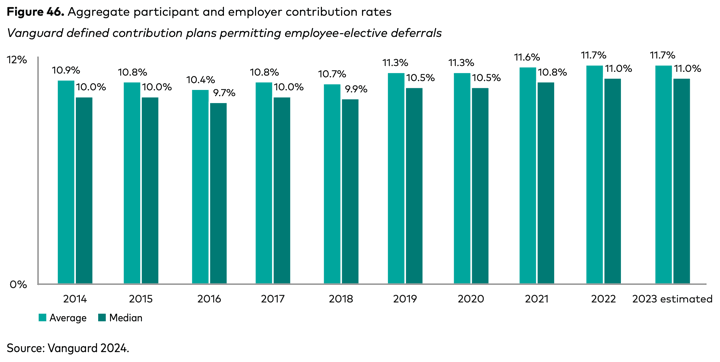
Median employee contribution rate was 6.2%. Median means that half of people were saving more, while half were saving less. This out of all participants. Average is weighted more by absolute dollar savings. The overall historical trend is rising slowly.

Median total contribution rate was 11%, which includes employer match. Nearly everyone gets some sort of employer match The overall historical trend is also rising slowly.

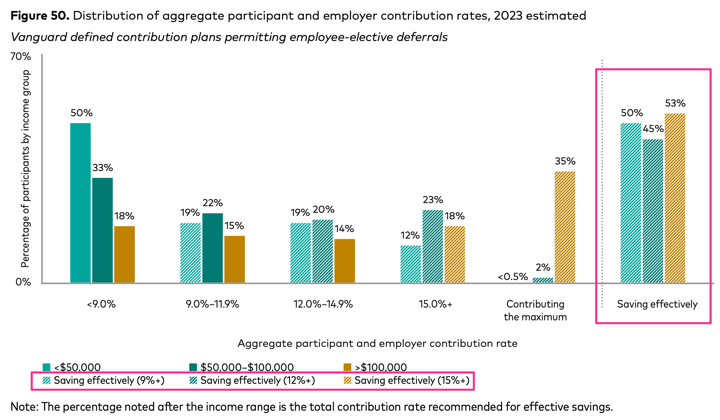
How much does Vanguard think we should be saving? Vanguard believes that if your income is under $50,000, you should be saving at least 9% total. If your income is $50k to $100k, you should be saving at least 12% total. If your income is over $100k, you should be saving at least 15% total.

About half of workers are “saving effectively” according this definition.

What about the “Super Savers”? Overall, 14% of participants saved the maximum allowed tax-advantaged amount in 2023. Maxing it out was very rare at less than 100k income levels. 53% of those with incomes of $150,000+ maxed out their contributions. Here is the full breakdown by income:

More are going beyond the traditional “maxing out the 401k. Interestingly, 9% of participants used the after-tax contribution option if it was available. 23% of those with incomes of $150,000+ maxed out used this option. I am assuming that many of these people are going for the “Mega Backdoor Roth”.

Asset allocation. This chart shows the trends in asset allocation as the participants age. The increased use of Target-Date Funds (TDFs) and other professional management options has changed it so that young people are less and less likely to hold cash. Asset allocations are becoming more uniform and aligned with TDFs in general.

A Wider View of the Long-Term Returns of Stocks (Different Countries and Time Periods)

Professor Edward McQuarrie has recently published the final part in his 3-part series about long-term stock returns at the CFA Institute:

He spends a lot of time fighting back against other people putting words in his mouth, so I’ll try to be extra careful in my own interpretation of his articles.

“One country, one century”. If you look at the returns of the S&P 500 from 1926-2024, as is the widely-available dataset, then yes, US stocks look pretty great for the long run. But this is “one country, one century”. If you look at other countries and other centuries, the returns can look different.

Countries other than the US. If you look at other countries, you will find multiple historical examples of negative average returns even over a 20-year period.

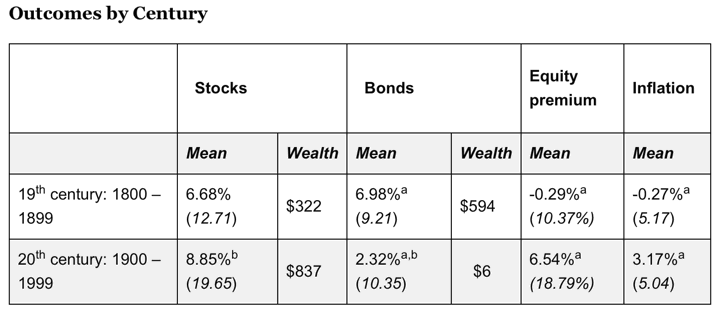
19th century US returns. If you stay with US stocks but change the century, you’ll also discover different results. In the 1800s, the long-term average returns between stocks and bonds were much closer, with bonds even winning by a hair:

I don’t know if this wider set of data will make anyone change their minds, but perhaps it’ll add a little more context to the argument.

To be clear, McQuarrie still states that owning a good chunk of stocks remains the best bet available. It’s not just a sure thing. At the minimum, consider the possibility that the difference in future returns between stocks and bonds may not be as wide as in the past 10-20 years.

Because stocks remain risky regardless of the holding period, stocks often outperform, because investors get compensated for taking that risk. Stocks are a good wager over the long term, on favorable odds. But stocks remain a bet, one that can go bad for any randomly selected investor over their personal time horizon.

S&P 500 Stocks: Are Long-Term Returns Always Above Inflation?

If you’d like a little bit of comfort as a long-term owner of stocks, check out this chart from Ben Carlson at A Wealth of Common Sense. He looks at every rolling 22-year period (based on a reader request) between 1926 to 2023, and finds that the minimum return during any 22-year period is still 1.4% above inflation. The average is a pretty impressive 7.2% above inflation.

Another interesting takeaway from this chart is that the enemy of after-inflation returns is not necessarily an intensely traumatic event like the Great Depression or World War II or the Great Financial/Housing Crisis, but also an extended period of high inflation. The worst real return period was around the 1970s:

Surprisingly, the worst 22 year period for real returns was not in the aftermath of the Great Depression but rather in the 1970s. The two-plus decade real return ending in the summer of 1982 was just 1.4% per year. That time frame featured an annual inflation rate of nearly 6% which is a high hurdle rate to beat.

Here is the a similar chart, but not adjusted for inflation.

Fidelity Treasury Only Money Market (FDLXX) as Fidelity Core Position Workaround

While it was welcome news that Fidelity now allows the Fidelity Government Money Market Fund (SPAXX) as a core position for their Cash Management Account as of June 2024, for many of us that reside in states with high state income tax rates, our net after-tax yield would still be much better if we were allowed to use the Fidelity Treasury Only Money Market Fund (FDLXX) as our core position instead.

This is because the interest from US government obligations like Treasury bills are exempt from state income taxes. (The Constitution declares that states are not allowed tax the Federal government.)

Many states have an income tax, but if you live in California, Connecticut, and New York, you should know that in 2023 neither Fidelity Government Money Market Fund (SPAXX) nor Fidelity® Treasury Money Market Fund (FZFXX) met the minimum investment in U.S. government securities required to exempt the distribution from tax in California, Connecticut, and New York. (Despite having Treasury in the name, FZFXX only had about 20% in eligible Treasury interest.) These are the core positions available in the standard Fidelity Account. Meanwhile, Fidelity Treasury Only Money Market Fund (FDLXX) did meet those requirements in 2023 with roughly 90% of interest eligible for exemption. (Source)

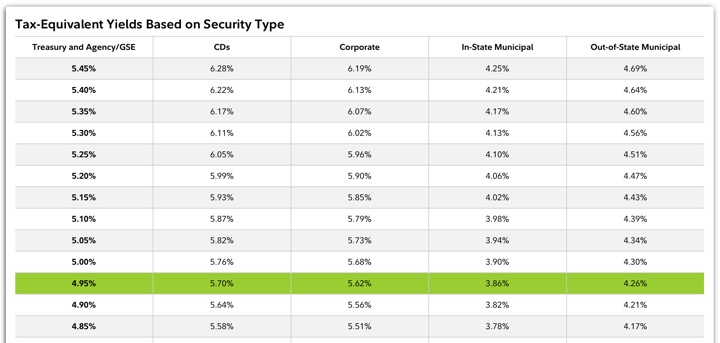
As of 8/4/24, the SEC yield of SPAXX was 4.98% and FDLXX was 4.95%. Pretty close. But if you assume a 10% state income tax rate, SPAXX would have to yield at least about 5.50% to equal the after-tax yield of FDLXX. This is just a ballmark estimate, and you can use Fidelity’s Tax-Equivalent Yield Calculator to get a more accurate number for your specific household.

Now, you can manually purchase FDLXX at any time with your SPAXX balance with no transaction fees. Then, whenever your SPAXX is zero and you still need cash, Fidelity will sell FDLXX on demand to fund any cash needs (Billpay, ACH withdrawal, debit card purchase, stock purchase, etc). However, if you get any new money like a paycheck direct deposit or dividend payment, it will automatically be used to purchase the core position (i.e. SPAXX). You’ll then have to make another manual purchase of FDLXX to convert that SPAXX to FDLXX. This is tedious and easy to forget about.

A workaround to this solution is to set up an automatic recurring purchase of FDLXX. Thanks to a comment from reader Henry and also this r\Fidelity post (actually multiple posts) where an official Fidelity rep confirmed that the mechanics work.

You’re on the right track; auto-liquidation of the Fidelity Treasury Only Money Market Fund (FDLXX) will occur to fund your recurring investment plan in this situation. Fidelity will attempt to cover debit balances created, whether through trades, direct debits, checkwriting, or even BillPay, by first using funds in your core balance. Once the core balance is depleted, the system will turn to any eligible secondary money market funds to cover the transaction.

As a recurring investment plan falls under the blanket of trades, auto liquidation will still be at play.

It’s important to note that not all non-core money markets are eligible for automatic liquidation to cover purchases. It is best practice to sell non-core money markets in advance of expected purchases, but you can also ask us about specific money markets to confirm their eligibility. As I alluded to above, FDLXX is eligible for auto-liquidation.

The mechanics. Depending on your cashflow patterns, you might set up a $1,000 weekly recurring purchase of FDLXX. If you have $1,000 in SPAXX (core), that will be used to purchase $1,000 of FDLXX. If you only have $150 of SPAXX, then $150 of SPAXX will be sold first AND $850 of FDLXX will be sold, and that will be used to purchase $1,000 of FDLXX. This is because FDLXX is classified as an “eligible secondary money market fund” and will auto-liquidate to satisfy your $1,000 purchase request, even though it’s effectively “buying itself”. If you don’t have enough FDLXX or other funds available, your scheduled purchase will be skipped that instance, but the recurring purchase plan will stay in place. Importantly, things like your stock holdings are NOT eligible for such auto-liquidation.

(Note: If you hold multiple money market funds, there is an order in which Fidelity will liquidate your money markets will liquidate. First the core position, next any taxable money markets, then any tax-exempt money markets (munis). Within each category, Fidelity draw from the fund with the highest balance first. Not all non-core money markets are eligible for automatic liquidation to cover purchases. Source.)

Here’s how to set up a recurring investment at Fidelity.

If you decide to proceed, you can set up a recurring investment by following the steps below after logging in on the website:

Expand the “Accounts & Trade” tab
Choose “Account Features”
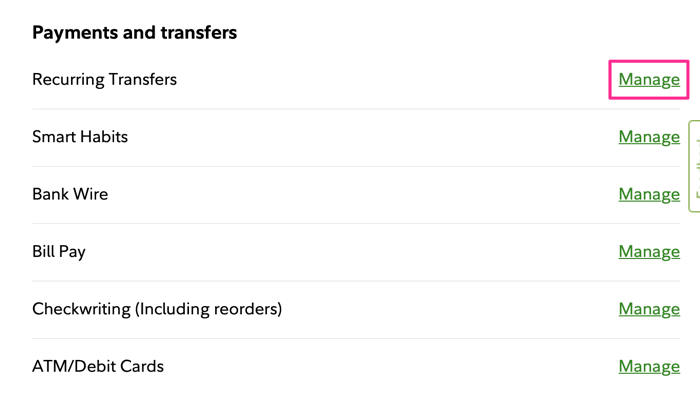
Click “Manage” next to Recurring Transfers
You can set up recurring investments on a weekly, biweekly, or monthly basis.

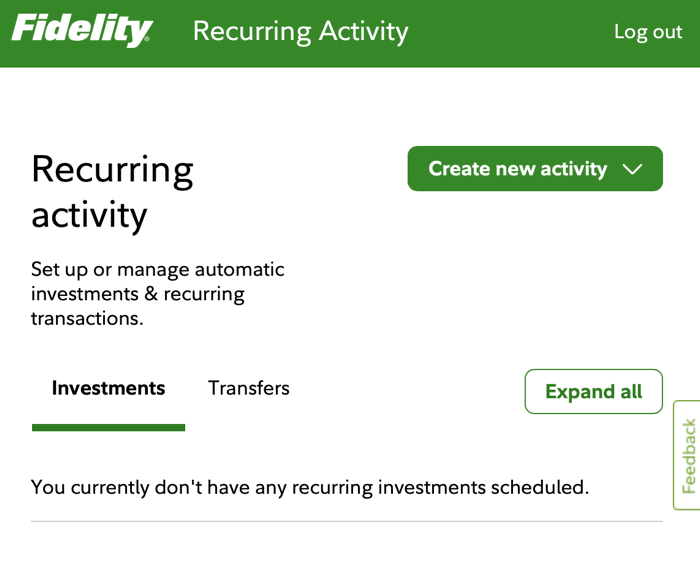
A few screenshots:

Set up properly, this should keep your SPAXX balance at a minimum and regularly shoveled into FDLXX. It’s still a little messy but it’s the best workaround currently available. I have been using my Fidelity CMA as my new primary checking account and it has been working out pretty well so far.

Best Interest Rates on Cash Roundup – August 2024

Here’s my monthly roundup of the best interest rates on cash as of August 2024, roughly sorted from shortest to longest maturities. There are lesser-known opportunities available to individual investors, often earning more money while keeping the same level of safety by moving to another FDIC-insured bank or NCUA-insured credit union. Check out my Ultimate Rate-Chaser Calculator to see how much extra interest you could earn from switching. Rates listed are available to everyone nationwide. Rates checked as of 8/4/2024.

TL;DR: Rates are dropping at all longer maturities, from 1-year out. Still 5%+ savings accounts and short-term CDs. Compare against Treasury bills and bonds at every maturity, taking into account state tax exemption. I no longer recommend fintech companies due to the possibility of loss due to poor recordkeeping and/or fraud.

High-yield savings accounts
Since the huge megabanks STILL pay essentially no interest, everyone should have a separate, no-fee online savings account to piggy-back onto your existing checking account. The interest rates on savings accounts can drop at any time, so I list the top rates as well as competitive rates from banks with a history of competitive rates and solid user experience. Some banks will bait you with a temporary top rate and then lower the rates in the hopes that you are too lazy to leave.

  • The top rate at the moment is at Poppy at 5.50% APY (3-month rate guarantee). I have no personal experience with them, but they are the top rates at the moment. CIT Platinum Savings at 5.00% APY with $5,000+ balance.
  • SoFi Bank is at 4.60% APY + up to $325 new account bonus with direct deposit. You must maintain a direct deposit of any amount each month for the higher APY. SoFi has historically competitive rates and full banking features. See details at $25 + $300 SoFi Money new account and deposit bonus.
  • Here is a limited survey of high-yield savings accounts. They aren’t the top rates, but a group that have historically kept it relatively competitive such that I like to track their history. Sad to see Ally Bank falling even further behind.

Short-term guaranteed rates (1 year and under)
A common question is what to do with a big pile of cash that you’re waiting to deploy shortly (plan to buy a house soon, just sold your house, just sold your business, legal settlement, inheritance). My usual advice is to keep things simple and take your time. If not a savings account, then put it in a flexible short-term CD under the FDIC limits until you have a plan.

  • No Penalty CDs offer a fixed interest rate that can never go down, but you can still take out your money (once) without any fees if you want to use it elsewhere. Marcus has a 7, 11, and 13-month No Penalty CD at 4.70% APY with a $500 minimum deposit. Consider opening multiple CDs in smaller increments for more flexibility.
  • EagleBank has a 1-year certificate at 5.40% APY ($1,000 min). I could not locate their early withdrawal penalty.
  • NexBank has a 1-year certificate at 5.35% APY ($10,000 min). There is a 180-day interest penalty if you withdraw your CD funds before maturity.

Money market mutual funds
Many brokerage firms that pay out very little interest on their default cash sweep funds (and keep the difference for themselves). Note: Money market mutual funds are highly-regulated, but ultimately not FDIC-insured, so I would still stick with highly reputable firms.

  • Vanguard Federal Money Market Fund is the default sweep option for Vanguard brokerage accounts, which has an SEC yield of 5.28% (changes daily, but also works out to a compound yield of 5.41%, which is better for comparing against APY). Odds are this is much higher than your own broker’s default cash sweep interest rate.

Treasury Bills and Ultra-short Treasury ETFs
Another option is to buy individual Treasury bills which come in a variety of maturities from 4-weeks to 52-weeks and are fully backed by the US government. You can also invest in ETFs that hold a rotating basket of short-term Treasury Bills for you, while charging a small management fee for doing so. T-bill interest is exempt from state and local income taxes, which can make a significant difference in your effective yield.

  • You can build your own T-Bill ladder at TreasuryDirect.gov or via a brokerage account with a bond desk like Vanguard and Fidelity. Here are the current Treasury Bill rates. As of 8/4/24, a new 4-week T-Bill had the equivalent of 5.37% annualized interest and a 52-week T-Bill had the equivalent of 4.37% annualized interest.
  • The iShares 0-3 Month Treasury Bond ETF (SGOV) has a 5.24% SEC yield and effective duration of 0.10 years. SPDR Bloomberg Barclays 1-3 Month T-Bill ETF (BIL) has a 5.20% SEC yield and effective duration of 0.08 years.

US Savings Bonds
Series I Savings Bonds offer rates that are linked to inflation and backed by the US government. You must hold them for at least a year. If you redeem them within 5 years there is a penalty of the last 3 months of interest. The annual purchase limit for electronic I bonds is $10,000 per Social Security Number, available online at TreasuryDirect.gov. You can also buy an additional $5,000 in paper I bonds using your tax refund with IRS Form 8888.

  • “I Bonds” bought between May 2024 and October 2024 will earn a 4.28% rate for the first six months. The rate of the subsequent 6-month period will be based on inflation again. More on Savings Bonds here.
  • In mid-October 2024, the CPI will be announced and you will have a short period where you will have a very close estimate of the rate for the next 12 months. I will have another post up at that time.

Rewards checking accounts
These unique checking accounts pay above-average interest rates, but with unique risks. You have to jump through certain hoops which usually involve 10+ debit card purchases each cycle, a certain number of ACH/direct deposits, and/or a certain number of logins per month. If you make a mistake (or they judge that you did) you risk earning zero interest for that month. Some folks don’t mind the extra work and attention required, while others would rather not bother. Rates can also drop suddenly, leaving a “bait-and-switch” feeling.

  • OnPath Federal Credit Union pays 7.00% APY on up to $10,000 if you make 15 debit card purchases, opt into online statements, and login to online or mobile banking once per statement cycle. Anyone can join this credit union via $5 membership fee to join partner organization. You can also get a $100 Visa Reward card when you open a new account and make qualifying transactions.
  • Genisys Credit Union pays 6.75% APY on up to $7,500 if you make 10 debit card purchases of $5+ each per statement cycle, and opt into online statements. Anyone can join this credit union via $5 membership fee to join partner organization.
  • Credit Union of New Jersey pays 6.00% APY on up to $25,000 if you make 12 debit card purchases, opt into online statements, and make at least 1 direct deposit, online bill payment, or automatic payment (ACH) per statement cycle. Anyone can join this credit union via $5 membership fee to join partner organization.
  • Andrews Federal Credit Union pays 6.00% APY on up to $25,000 if you make 15 debit card purchases, opt into online statements, and make at least 1 direct deposit or ACH transaction per statement cycle. Anyone can join this credit union via partner organization.
  • Pelican State Credit Union pays 6.05% APY on up to $20,000 if you make 15 debit card purchases, opt into online statements, log into your account at least once, and make at least 1 direct deposit, online bill payment, or automatic payment (ACH) per statement cycle. Anyone can join this credit union via partner organization membership.
  • Orion Federal Credit Union pays 6.00% APY on up to $10,000 if you make electronic deposits of $500+ each month (ACH transfers count) and spend $500+ on your Orion debit or credit card each month. Anyone can join this credit union via $10 membership fee to partner organization membership.
  • All America/Redneck Bank pays 5.00% APY on up to $15,000 if you make 10 debit card purchases each monthly cycle with online statements.
  • Find a locally-restricted rewards checking account at DepositAccounts.

Certificates of deposit (greater than 1 year)
CDs offer higher rates, but come with an early withdrawal penalty. By finding a bank CD with a reasonable early withdrawal penalty, you can enjoy higher rates but maintain access in a true emergency. Alternatively, consider building a CD ladder of different maturity lengths (ex. 1/2/3/4/5-years) such that you have access to part of the ladder each year, but your blended interest rate is higher than a savings account. When one CD matures, use that money to buy another 5-year CD to keep the ladder going. Some CDs also offer “add-ons” where you can deposit more funds if rates drop.

  • Grow Financial FCU has a 5-year CD at 4.75% APY. 4-year at 4.02% APY. 3-year at 4.02% APY. 2-year at 4.33% APY. 1-year at 4.75% APY. $500 minimum. The early withdrawal penalty (EWP) for CD maturities of 12 months or more is 180 days of interest. Membership to this credit union is open nationwide to members of Friends of U.S. Military Families ($5).
  • Credit Human has a 59-month CD at 4.60% APY. 48-month at 4.60% APY. 35-month at 4.70% APY. 23-month at 5.00% APY. 1-year at 4.90% APY. $500 minimum. The early withdrawal penalty (EWP) for CD maturities of 36 months or more is 365 days of interest. For CD maturity of 1 year, the EWP is 270 days of interest. This is actually a credit union, but is open nationwide with a American Consumer Council (ACC) membership. Try promo code “consumer” when signing up at ACC for a free membership.
  • First Internet Bank has a 5-year CD at 4.50% APY. 4-year at 4.45% APY. 3-year at 4.61% APY. 2-year at 4.76% APY. 1-year at 5.26% APY. $1,000 minimum. The early withdrawal penalty (EWP) for CD maturities of 2 years or more is 360 days of interest. For CD maturity of 1 year, the EWP is 180 days of interest.
  • You can buy certificates of deposit via the bond desks of Vanguard and Fidelity. You may need an account to see the rates. These “brokered CDs” offer FDIC insurance and easy laddering, but they don’t come with predictable early withdrawal penalties. Right now, I see a 5-year non-callable CD at 3.95% APY (callable: no, call protection: yes). Be warned that now both Vanguard and Fidelity will list higher rates from callable CDs, which importantly means they can call back your CD if rates drop later.

Longer-term Instruments
I’d use these with caution due to increased interest rate risk (tbh, I don’t use them at all), but I still track them to see the rest of the current yield curve.

  • Willing to lock up your money for 10 years? You can buy long-term certificates of deposit via the bond desks of Vanguard and Fidelity. These “brokered CDs” offer FDIC insurance, but they don’t come with predictable early withdrawal penalties. You might find something that pays more than your other brokerage cash and Treasury options. Right now, I see a 10-year CDs at 4.05% (non-callable) vs. 3.80% for a 10-year Treasury. Watch out for higher rates from callable CDs where they can call your CD back if interest rates drop.

All rates were checked as of 8/4/2024.

Photo by Giorgio Trovato on Unsplash

Charles Schwab Brokerage: Up to $6,000 New Deposit / Transfer Bonus (New & Existing Customers)

Update: Schwab has suspended/ended this “Up to $6,000” transfer promotion as of October 2024. The referral offer appears to still be available, which is up to $1,000.

Brokerage firms constantly compete for “assets under management”, and many are willing to give you cash to move over your existing portfolio from your existing broker over to them. Unfortunately, many of these offers are for new app startups with questionable customer service. How about a traditional firm with telephones connected to knowledgable humans working inside physical branches in major metro areas?

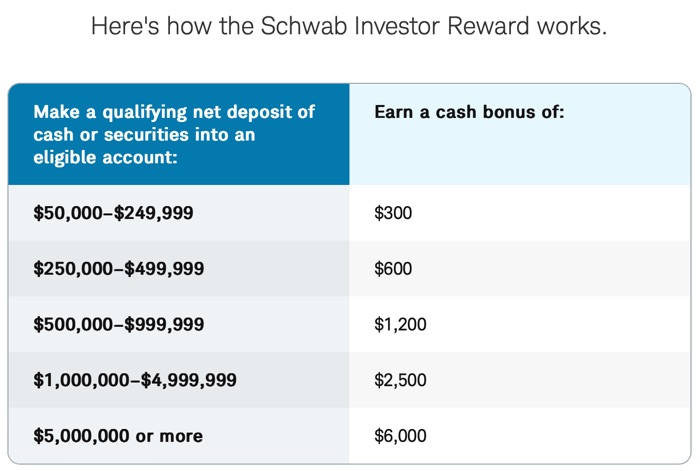
Charles Schwab is currently offering up to a $6,000 cash bonus depending the value of assets that you move over (qualifying net deposit of cash or securities) within 45 days of enrollment. The minimum hold period is one year for taxable brokerage accounts. The percentages aren’t the best, and the tiers are relatively high, but this is actually a brokerage I wouldn’t mind leaving my assets at for the long run. It’s also available to existing Schwab customers.

  • $200 with $50,000–$99,999 in new assets
  • $300 with $100,000–$249,999 in new assets
  • $600 with $250,000–$499,999 in new assets
  • $1,200 with $500,000–$999,999 in new assets
  • $2,500 with $1,000,000-$4,999,999 in new assets
  • $6,000 with $5,000,000+ in new assets

Note: New-to-Schwab clients should compare this with the Schwab Referral Offer, which may offer a slightly higher bonus at specific asset levels (ex. $100 bonus on $25k in new assets, $300 bonus on $50k in new assets, $500 bonus on $100k in new assets). At the higher tiers, the offer above is better. That’s my referral link, thanks if you use it (although please let me know if you have issues with it; I’ve never actually gotten a bonus from Schwab so I’m not sure if it really works).

The easiest option is often to perform an in-kind ACAT transfer of existing securities, which takes less than a week and all of your tax basis information should also move over after another few days. Your old broker may charge you an outgoing ACAT fee about about $75, although you should ask Schwab if they will reimburse you for
this fee.

Both taxable and IRA accounts are eligible. From the fine print and FAQ:

Accounts that are eligible for the Schwab Investor Reward include: Schwab retail brokerage accounts and individual retirement accounts (IRAs), including accounts enrolled in Schwab-sponsored investment advisory programs such as Schwab Intelligent Portfolios®, Schwab Managed Portfolios™, Schwab Managed Account Select®, Schwab Managed Account Connection®, and Schwab Wealth Advisory™.

Schwab Bank Investor Checking™ accounts do not qualify for this promotion whether they are linked to a brokerage or are stand-alone. If you make a deposit in a Schwab Bank Investor Checking™ account, you will not receive the award. The offer also does not apply to the Schwab Global Account™, ERISA-covered retirement plans, certain tax-qualified retirement plans and accounts, education savings accounts, Schwab Bank accounts, or accounts managed by independent investment advisors.

Can two clients in the same home get the award?

Yes. As long as both clients have individual accounts and separately qualify for the Reward, provided that each makes a qualifying net deposit.

Schwab appears to still be offering their $101 Starter Kit promo. But the FAQ says “Can this offer be combined with other offers? No. This offer can’t be combined with other offers.” I’m not sure if it counts as combining if you first open the new account for the Starter Kit bonus, wait, and then participate in this transfer offer.

One major drawback with Schwab is that the default cash sweep is not good. Still just 0.48% APY as of 7/16/24! Boo. You need to take proactive steps to avoid lost interest if you plan to keep significant amounts of cash in their default sweep account. Consider buying Treasury bills, brokered CDs, or Treasury Bill ETFs like GBIL (still possible to lose value). See my separate post on the best alternative Schwab cash sweep options.

529 College Savings Plans: All 50 States Tax Benefit Comparison (Updated 2024)

Updated for 2024. Morningstar is a great resource for research on 529 college savings plans, and they have recently updated their annual deep dive on 529 plans: The 2024 529 Savings Plan Landscape (e-mail required).

When choosing a 529 college savings plan, you can open a 529 plan from any state (not just your own). However, each state can vary widely in what they offer in terms of tax deductions and/or tax credits. So how to do you choose?

  • No state tax? ➡ Just pick the best overall plan.
  • No special tax benefits (deduction or credit)? ➡ Just pick the best overall plan.
  • Home state offers tax parity? (the same tax benefits no matter which state’s plan you pick) ➡ Just pick the best overall plan.
  • Home state requires you to contribute to your home state plan to get the tax perk? ➡ Technically, you should compare the annual tax savings against any potential perks from the best overall plan (lower annual expenses, superior investment options). In most cases, I have found that if a state cares enough to offers a state tax deduction or tax credit, and you are contributing an amount under or around the max limit (ex. under $200 a month), then the in-state plan is most likely good enough and you should stick with it. The main exception is if you plan on funding your plan with a large upfront contribution, where a lower expense ratio would really matter.

If you are in the last situation in which you have to do some math, this Morningstar article also runs the numbers for a theoretical couple filing jointly with a gross annual income of $100,000 that deposits $3,000 a year (or $250 a month) into one beneficiary’s 529 account. The chart is useful to provide a quick idea of your state’s tax benefits at a glance, but I would make sure to run the numbers for your income and your expected annual contribution. This Vanguard state deduction calculator tool may be helpful to double-check your calculations.

Finally, note that some states will also recapture any tax benefits if you perform an outbound 529 rollover, or otherwise do not conform with federal tax laws regarding 529 distributions.

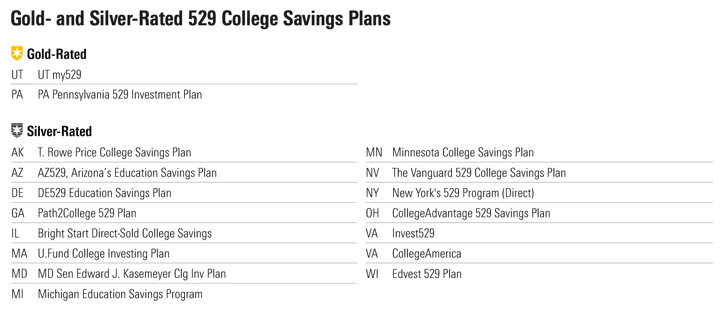
Top plans quick recap. Here are Morningstar’s top Gold and Silver-rated plans as of Summer 2024.

I personally invest in the Utah My529 Plan for my children due to their DIY glide path feature and DFA fund access, but my second choice would be the Vanguard Nevada 529 Plan if you want something that is more “set-and-forget”, especially if you already have other accounts at Vanguard. I wouldn’t spend too much time splitting hairs – taking action and starting an automatic savings plan is the most critical decision.

Opening a plan and making any contribution also starts the 10-year clock on potential future 529-to-Roth IRA rollovers.

Best Interest Rates on Cash Roundup – July 2024

Here’s my monthly roundup of the best interest rates on cash as of July 2024, roughly sorted from shortest to longest maturities. There are lesser-known opportunities available to individual investors, often earning more money while keeping the same level of safety by moving to another FDIC-insured bank or NCUA-insured credit union. Check out my Ultimate Rate-Chaser Calculator to see how much extra interest you could earn from switching. Rates listed are available to everyone nationwide. Rates checked as of 7/9/2024.

TL;DR: Very minor changes since last month. Still 5%+ savings accounts and short-term CDs, with long-term CD rates holding roughly steady since last month. Compare against Treasury bills and bonds at every maturity, taking into account state tax exemption. I no longer recommend fintech companies due to the possibility of loss of permanent capital loss, or at the minimum access to cash for months in the event of a company or middleman failure.

High-yield savings accounts
Since the huge megabanks STILL pay essentially no interest, everyone should have a separate, no-fee online savings account to piggy-back onto your existing checking account. The interest rates on savings accounts can drop at any time, so I list the top rates as well as competitive rates from banks with a history of competitive rates and solid user experience. Some banks will bait you with a temporary top rate and then lower the rates in the hopes that you are too lazy to leave.

  • The top rate at the moment is at My Banking Direct at 5.55% APY . Poppy at 5.50% APY (3-month rate guarantee). I have no personal experience with them, but they are the top rates at the moment. CIT Platinum Savings at 5.00% APY with $5,000+ balance.
  • SoFi Bank is at 4.60% APY + up to $325 new account bonus with direct deposit. You must maintain a direct deposit of any amount each month for the higher APY. SoFi has historically competitive rates and full banking features. See details at $25 + $300 SoFi Money new account and deposit bonus.
  • Here is a limited survey of high-yield savings accounts. They aren’t the top rates, but a group that have historically kept it relatively competitive such that I like to track their history. Sad to see Ally Bank falling even further behind.

Short-term guaranteed rates (1 year and under)
A common question is what to do with a big pile of cash that you’re waiting to deploy shortly (plan to buy a house soon, just sold your house, just sold your business, legal settlement, inheritance). My usual advice is to keep things simple and take your time. If not a savings account, then put it in a flexible short-term CD under the FDIC limits until you have a plan.

  • No Penalty CDs offer a fixed interest rate that can never go down, but you can still take out your money (once) without any fees if you want to use it elsewhere. Marcus has a 13-month No Penalty CD at 4.70% APY with a $500 minimum deposit. Also available at 7- and 11-months. Consider opening multiple CDs in smaller increments for more flexibility.
  • NexBank has a 1-year certificate at 5.40% APY ($25,000 min). There is a 180-day interest penalty if you withdraw your CD funds before maturity.
  • CFG Bank has a 12-month CD at 5.36% APY ($500 min). 90-day interest penalty if you withdraw your CD funds before maturity.

Money market mutual funds + Ultra-short bond ETFs
Many brokerage firms that pay out very little interest on their default cash sweep funds (and keep the difference for themselves). Note: Money market mutual funds are highly-regulated, but ultimately not FDIC-insured, so I would still stick with highly reputable firms. I am including a few ultra-short bond ETFs as they may be your best cash alternative in a brokerage account, but they may experience losses.

  • Vanguard Federal Money Market Fund is the default sweep option for Vanguard brokerage accounts, which has an SEC yield of 5.27% (changes daily, but also works out to a compound yield of 5.40%, which is better for comparing against APY). Odds are this is much higher than your own broker’s default cash sweep interest rate.
  • The PIMCO Enhanced Short Maturity Active Bond ETF (MINT) has a 5.33% SEC yield and the iShares Short Maturity Bond ETF (NEAR) has a 5.09% SEC yield while holding a portfolio of investment-grade bonds with an average duration of ~6 months.

Treasury Bills and Ultra-short Treasury ETFs
Another option is to buy individual Treasury bills which come in a variety of maturities from 4-weeks to 52-weeks and are fully backed by the US government. You can also invest in ETFs that hold a rotating basket of short-term Treasury Bills for you, while charging a small management fee for doing so. T-bill interest is exempt from state and local income taxes, which can make a significant difference in your effective yield.

  • You can build your own T-Bill ladder at TreasuryDirect.gov or via a brokerage account with a bond desk like Vanguard and Fidelity. Here are the current Treasury Bill rates. As of 7/9/24, a new 4-week T-Bill had the equivalent of 5.37% annualized interest and a 52-week T-Bill had the equivalent of 5.02% annualized interest.
  • The iShares 0-3 Month Treasury Bond ETF (SGOV) has a 5.27% SEC yield and effective duration of 0.10 years. SPDR Bloomberg Barclays 1-3 Month T-Bill ETF (BIL) has a 5.22% SEC yield and effective duration of 0.08 years.

US Savings Bonds
Series I Savings Bonds offer rates that are linked to inflation and backed by the US government. You must hold them for at least a year. If you redeem them within 5 years there is a penalty of the last 3 months of interest. The annual purchase limit for electronic I bonds is $10,000 per Social Security Number, available online at TreasuryDirect.gov. You can also buy an additional $5,000 in paper I bonds using your tax refund with IRS Form 8888.

  • “I Bonds” bought between May 2024 and October 2024 will earn a 4.28% rate for the first six months. The rate of the subsequent 6-month period will be based on inflation again. More on Savings Bonds here.
  • In mid-October 2024, the CPI will be announced and you will have a short period where you will have a very close estimate of the rate for the next 12 months. I will have another post up at that time.

Rewards checking accounts
These unique checking accounts pay above-average interest rates, but with unique risks. You have to jump through certain hoops which usually involve 10+ debit card purchases each cycle, a certain number of ACH/direct deposits, and/or a certain number of logins per month. If you make a mistake (or they judge that you did) you risk earning zero interest for that month. Some folks don’t mind the extra work and attention required, while others would rather not bother. Rates can also drop suddenly, leaving a “bait-and-switch” feeling.

  • OnPath Federal Credit Union pays 7.00% APY on up to $10,000 if you make 15 debit card purchases, opt into online statements, and login to online or mobile banking once per statement cycle. Anyone can join this credit union via $5 membership fee to join partner organization. You can also get a $100 Visa Reward card when you open a new account and make qualifying transactions.
  • Genisys Credit Union pays 6.75% APY on up to $7,500 if you make 10 debit card purchases of $5+ each per statement cycle, and opt into online statements. Anyone can join this credit union via $5 membership fee to join partner organization.
  • Credit Union of New Jersey pays 6.00% APY on up to $25,000 if you make 12 debit card purchases, opt into online statements, and make at least 1 direct deposit, online bill payment, or automatic payment (ACH) per statement cycle. Anyone can join this credit union via $5 membership fee to join partner organization.
  • Andrews Federal Credit Union pays 6.00% APY on up to $25,000 if you make 15 debit card purchases, opt into online statements, and make at least 1 direct deposit or ACH transaction per statement cycle. Anyone can join this credit union via partner organization.
  • Pelican State Credit Union pays 6.05% APY on up to $20,000 if you make 15 debit card purchases, opt into online statements, log into your account at least once, and make at least 1 direct deposit, online bill payment, or automatic payment (ACH) per statement cycle. Anyone can join this credit union via partner organization membership.
  • Orion Federal Credit Union pays 6.00% APY on up to $10,000 if you make electronic deposits of $500+ each month (ACH transfers count) and spend $500+ on your Orion debit or credit card each month. Anyone can join this credit union via $10 membership fee to partner organization membership.
  • All America/Redneck Bank pays 5.00% APY on up to $15,000 if you make 10 debit card purchases each monthly cycle with online statements.
  • Find a locally-restricted rewards checking account at DepositAccounts.

Certificates of deposit (greater than 1 year)
CDs offer higher rates, but come with an early withdrawal penalty. By finding a bank CD with a reasonable early withdrawal penalty, you can enjoy higher rates but maintain access in a true emergency. Alternatively, consider building a CD ladder of different maturity lengths (ex. 1/2/3/4/5-years) such that you have access to part of the ladder each year, but your blended interest rate is higher than a savings account. When one CD matures, use that money to buy another 5-year CD to keep the ladder going. Some CDs also offer “add-ons” where you can deposit more funds if rates drop.

  • Grow Financial FCU has a 5-year CD at 4.75% APY. 4-year at 4.02% APY. 3-year at 4.02% APY. 2-year at 4.33% APY. 1-year at 4.75% APY. $500 minimum. The early withdrawal penalty (EWP) for CD maturities of 12 months or more is 180 days of interest. Membership to this credit union is open to members of Friends of U.S. Military Families ($5).
  • Credit Human has a 59-month CD at 4.65% APY. 48-month at 4.65% APY. 35-month at 4.75% APY. 23-month at 5.10% APY. 1-year at 4.95% APY. $500 minimum. The early withdrawal penalty (EWP) for CD maturities of 36 months or more is 365 days of interest. For CD maturity of 1 year, the EWP is 270 days of interest. This is actually a credit union, but is open nationwide with a American Consumer Council (ACC) membership. Try promo code “consumer” when signing up at ACC for a free membership.
  • First Internet Bank has a 5-year CD at 4.50% APY. 4-year at 4.45% APY. 3-year at 4.61% APY. 2-year at 4.76% APY. 1-year at 5.26% APY. $1,000 minimum. The early withdrawal penalty (EWP) for CD maturities of 2 years or more is 360 days of interest. For CD maturity of 1 year, the EWP is 180 days of interest.
  • BMO Alto has a 5-year CD at 4.80% APY. 4-year at 4.70% APY. 3-year at 4.60% APY. 2-year at 4.65% APY. 1-year at 5.05% APY. No minimum. The early withdrawal penalty (EWP) for CD maturities of 1 year or more is 180 days of interest. For CD maturities of 11 months or less, the EWP is 90 days of interest. Note that they reserve the right to prohibit early withdrawals entirely (!). Online-only subsidiary of BMO Bank.
  • You can buy certificates of deposit via the bond desks of Vanguard and Fidelity. You may need an account to see the rates. These “brokered CDs” offer FDIC insurance and easy laddering, but they don’t come with predictable early withdrawal penalties. Right now, I see a 5-year non-callable CD at 4.45% APY (callable: no, call protection: yes). Be warned that now both Vanguard and Fidelity will list higher rates from callable CDs, which importantly means they can call back your CD if rates drop later.

Longer-term Instruments
I’d use these with caution due to increased interest rate risk (tbh, I don’t use them at all), but I still track them to see the rest of the current yield curve.

  • Willing to lock up your money for 10 years? You can buy long-term certificates of deposit via the bond desks of Vanguard and Fidelity. These “brokered CDs” offer FDIC insurance, but they don’t come with predictable early withdrawal penalties. You might find something that pays more than your other brokerage cash and Treasury options. Right now, I see a 10-year CDs at [n/a] (callable: no, call protection: yes) vs. 4.30% for a 10-year Treasury. Watch out for higher rates from callable CDs where they can call your CD back if interest rates drop.

All rates were checked as of 7/9/2024.

Photo by micheile henderson on Unsplash

US stocks 500% vs. International Stocks 100% Gain Over Last 16 Years

If you’ve looked at your portfolio and wondered exactly how much US stocks have outperformed the rest of the world, Charlie Bilello shares in his July 4th post USA! USA! USA!:

Over the last 16 years, US stocks have gained 502% vs. 104% for International stocks and 65% for Emerging Markets. This is by far the longest cycle of US outperformance that we’ve ever seen.

Will the gap continue to grow? I still don’t know, which is why I will continue to hedge my bets. Sometimes you shell out for insurance and it doesn’t pay out a claim. That doesn’t necessarily mean you should complain. I’m satisfied with my portfolio performance over the last 16 years. I couldn’t predict what happened, and I can’t predict how the next 16 years will go. I’d happily take another 16 years of the same, even if it means lagging the S&P 500 by a lot.