Creating Retirement Income Only From Dividends and Interest?

What happens when you finally want to live off of your portfolio? Most withdrawal methods call for a combination of spending dividends and selling shares to cover the rest. But what if you wanted to live only off of dividends from your stocks and the interest from bonds? I was curious to see how this would have worked out historically.

Let’s say you had $100,000 invested in a mutual fund, and you had to live off the dividend income produced from those shares without any additional buying or selling. I found historical price data and dividend distributions for select funds from Yahoo Finance that went back to 1987-1990, and added up the trailing 12 months of dividends to see how much money they would have generated over a year’s time.

The Vanguard Wellesley Income Fund (VWINX) is a low-cost, actively-managed fund which has been around since 1970. It is composed of approximately 35% dividend-oriented stocks and 65% bonds (mostly corporate for higher yields). This conservative allocation is designed to create a steady income stream with less focus on capital appreciation. Let’s see how $100,000 invested in 1988 would have done in terms of income:

In 1988, interest rates were relatively high and $100,000 of Wellesley shares would have created nearly $9,000 of annual income. In 2012, that same set of shares would be worth $156,000 and your income would be about $5,400 annually. The income produced had some swings, but overall did not seem to track with inflation although the share price did better. According to the CPI, $100,000 in 1988 would buy as much stuff as $180,000 today.

The Vanguard 500 Index Fund was the first index fund available to the public and is now one of the largest funds in the world, passively following the S&P 500 index of large US companies since 1976 and thus always 100% stocks. Even though this is not a dividend-focused fund, it still does produce a regular stream of dividends from the companies it tracks:

In contrast, $100,000 of the Vanguard 500 Fund would have only created about $2,700 of income in 1988, but that income has grown over the next 24 years to about $8,800 today in 2012. Also of high significance is that the value of your $100,000 worth of shares from 1988 would be worth around $500,000 today.

This is just a limited snapshot of two funds, but it would suggest that you can’t just buy an income-oriented fund that has a large chunk of bonds and expect to sit back and spend whatever dividends are spit out. However, things would have turned out much better if one was reinvesting a big chunk of those Wellesley dividends when the overall yield was high. I can still envision a income-oriented portfolio, but I will have to set a reasonable withdrawal rate that isn’t too high and have the discipline to plow the rest back into buying more shares.

Financial Status Bar & Goal Updates

This updated post explains my ratio-based method of tracking our financial progress towards early retirement (as shown by the status indicator on the top right of every blog page).

Cash Reserves / Emergency Fund

Our goal is to always have a full year of expenses in cash equivalents as our “emergency fund”. (This is not the same as a year of income. Our expenses are much lower than our income.) This is a cushion for a variety of potential events including job loss, health concerns, or other unplanned costs. It also allows us to take a more long-term view with our investment portfolio since we know we won’t have to touch it.

Since our emergency fund is relatively large, I try to maximize the yield. If we stuck it all in a money market fund, the yield would be barely above zero. With a bit of work, our cash earns a blended rate of over 2% annually without taking on extra risk. We use the same accounts to make money from no fee 0% APR balance transfer offers, but currently don’t play that “game”. Here are recent updates on where we keep our cash:

March 2013 Cash Reserves Update
June 2012 Cash Reserves Update
March 2012 Cash Reserves Update
May 2011 Cash Reserves Update
January 2011 Cash Reserves Update

Home Equity

I don’t think everyone should buy a house (or more accurately, take out a huge loan on a house), as it historically doesn’t necessarily work out to be a very good investment over short or even long periods. However, if you are geographically stable, I do think buying and eventually owning a house free and clear can be a solid component of an early retirement plan. My current forecast is to have our house paid off in 10-15 5-10 years. Housing is very expensive where I live, so once that mortgage payment is gone, the actual income my investments will have to produce will drop drastically.

There are many ways to define home equity, and I am sticking to a simple method of calculating home equity by taking 100% minus (outstanding mortgage balance / original home purchase price). As of 2011, our home price has rebounded to over the original purchase price according to a refinance appraisal and comparable sales. Overall, I’d rather enjoy having continuous progress without worrying about my home’s exact market value. Here are some previous mortgage updates:

April 2013 Mortgage Paid Off
[…]
November 2011 Mortgage Payoff Update
February 2011 Mortgage Payoff Update

Investment Portfolio

The goal of my investment portfolio is allow withdrawals to support our needed expenses in “retirement”. Again, income and expenses are not the same thing. After mortgage payoff, I expect our required expenses to be less than 25% of our current income. I like to assume a simple 3% safe withdrawal rate, which means for every $100,000 saved, I can generate $3,000 a year of inflation-adjusted income for the rest of our lives. I used to assume 4%, but since our target “retirement” age is in our 40s and not 60s, I feel that 3% is better. Even 3% is not guaranteed, but again it does provide a quick estimate of progress. Here are recent portfolio updates:

June 2013 Investment Portfolio Update
January 2013 Investment Portfolio Update
July 2012 Investment Portfolio Update
February 2012 Investment Portfolio Update
November 2011 Investment Portfolio Update
July 2011 Investment Portfolio Update

My initial goal was to try and keep the home equity and expense replacement ratio about the same so that both will reach 100% at the same time, but we’ll see. I am still (very slowly) researching shifting to a more income-oriented portfolio that yields about 3% and has a principal value that can grow with inflation.

The actual implementation of my plan will probably require more flexibility. At some point, I plan on using some of my money and invest in an immediate annuity for some income stability. I’ll also need to vary my exact withdrawal rates a bit with market conditions. Once I reach age 70 or so, Social Security will kick in something. I don’t think Social Security will disappear although I do expect means-testing, but who knows these days.

Dilbert Teaches You About Investing

The Dilbert comic often dispenses good investing advice, but sometimes it’s either so spot on or so subtle that I think it’s worth repeating to makes sure everyone gets the lesson behind the joke.

Perils of market timing explained:


Alternate title: Momentum investing explained, via Abnormal Returns

Survivorship bias explained:


This actually happens!

Financial advisors with high costs and bad incentive structures explained:


Buyer beware…

Subprime mortgage crisis explained:


Diversification!

On a more serious and practical note, don’t forget about Dilbert’s One-Page Guide to Everything Financial.

FutureAdvisor: Free Online Portfolio Management and Asset Allocation

Another new online portfolio management tool is FutureAdvisor. I want to say they were invite-only for a while, but they appear to be wide open to new accounts now. Their basic account is free “forever”, and you can add 24/7 portfolio rebalancing alerts along with an annual videoconference call with an advisor for $49/year. The process of setting things up is pretty simple with the following steps laid out:

Personal Profile
Enter pertinent information such as current age, current income, desired retirement age, and desired retirement income. I like that they don’t just assume that you want to spend 80% of your current income in retirement. However, the total of your portfolio holdings entered here will be replace by whatever you share in the next step. I’m not really sure why they bother asking.

Financial Profile
You can either manually enter your portfolio holdings or have them import it automatically using your username and password. Most major brokerage companies including 401k accounts are available, but I did notice some that are currently not supported. The supported list includes Vanguard, Fidelity (w/ Netbenefits), Schwab, Merrill, and TD Ameritrade. The unsupported list includes TradeKing, Zecco, and Interactive Brokers.

Asset Allocation
Based on the information given and that same ole’ multiple-choice risk questionnaire, they will suggest to you a model asset allocation. You can tweak the target by picking between Conservative (60/40 stocks/bonds), Moderate (80/20), and Aggressive (90/10). Here’s the conservative asset allocation assigned to me:
[Read more…]

Barron’s Top Online Broker Rankings 2012

Weekly business newspaper Barron’s recently released their 2012 annual broker survey rankings. A change from last year is that now the quality and availability of mobile apps for smartphones and iPads are now part of the criteria, as well as more attention paid to the ability to place transactions directly on international exchanges.
Barron’s admits their overall rankings are based on the needs of their paying subscribers – namely “wealthy, active traders”. As such, their overall winner was Interactive Brokers, which has an extensive feature set with low per-trade commissions but also requires a minimum opening balance of $10,000, a minium monthly fee of $10, and is lacking customer service especially for smaller investors.

I am not an active trader, I would say I do less than 50 trades a year mostly using ETFs. Based on no data whatsoever, I would guess that most readers here are also not active traders and don’t need a full-service terminal with real-time streaming charts and complex options order-entry capability. (Although I know some of you are.) Now, I still like having real-time quotes, a nice user interface, and friendly service when I need it. So thankfully Barron’s also ranked the brokers for other investing styles:

Top 5 Brokers for Novice Investors

  1. TD Ameritrade. Notes above-average costs, but more features and good mobile app. Curiously, no mention of the 100 commission-free ETF list.
  2. Fidelity
  3. E-Trade
  4. Charles Schwab
  5. Capital One 360 Sharebuilder

Top 5 Brokers for Long-Term Investing

  1. Fidelity – Notes good mix of reasonable cost, research tools, and overall usability.
  2. TD Ameritrade
  3. Charles Schwab
  4. E-Trade
  5. TradeKing

Top 5 Brokers for In-Person Service

  1. Scottrade. Notes over 500 physical branches across US.
  2. Merrill Edge
  3. Charles Schwab
  4. Fidelity
  5. TD Ameritrade

I found it weird that they mention Scottrade’s meager list of proprietary commission-free ETFs that nobody hardly uses, but completely ignore the fact that TD Ameritrade includes 100 of the world’s largest and most heavily traded ETFs on their commission-free list. I guess they really are laser-focused on daytraders and people trading on Asian exchanges in the middle of the night.

Warren Buffett Was Nearly Content With Early Retirement At 25

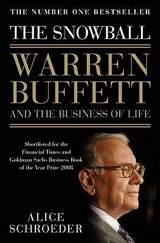
snowball_bookHere is an insightful ForbesLife interview by Warren Buffett in their “When I was 25” series. The article is primarily about how he ended up starting the investing partnership that eventually became Berkshire Hathaway. But what I didn’t know was that before that happened, he actually was ready to settle down in early retirement when he was 25 years old, content to invest just his own money:

The thing is, when I got out of college, I had $9,800, but by the end of 1955, I was up to $127,000. I thought, I’ll go back to Omaha, take some college classes, and read a lot—I was going to retire! I figured we could live on $12,000 a year, and off my $127,000 asset base, I could easily make that. I told my wife, “Compound interest guarantees I’m going to get rich.” […]

I had no plans to start a partnership, or even have a job. I had no worries as long as I could operate on my own. I certainly did not want to sell securities to other people again.

Adjusting for inflation using CPI, $127,000 in 1955 would be about $1,100,000 in 2012 dollars. Spending $12,000 a year in 1955 would be just about $100,000 a year today. A 9% portfolio withdrawal rate is pretty high, but then again he’s Warren Buffett.

If he had gone the early retirement route, I’m sure he’d still be a comfortably rich Nebraska family man today, but given his quiet lifestyle we probably wouldn’t know anything about him. In fact, Buffett had already turned down an offer to be a partner in the hedge fund that Benjamin Graham founded. But events conspired to let him manage other people’s money without the pressures of salesmanship or marketing, and $50 billion later he’s one of the richest people alive.

I already knew from reading his biography The Snowball that he was quite the young entrepreneur and by 16 years old he had already accumulated over $58,000 in 2012 dollars ($5,000 in 1946). This was from many different micro-businesses including delivering newspapers, selling everything from gum to car washes, and owning pinball machines. He already knew that the faster he earned that money, the more time he would have to let compound interest do its thing. After moving back to Omaha, he even rented a house at first instead of buying so he wouldn’t have to commit any of his precious capital.

In any case, interesting that his initial goal was early retirement and career freedom, not necessarily doing whatever he could to accumulate more money. I look forward to the other articles in this series.

MarketRiders Portfolio Manager Review: First Look, Asset Allocation

Time to try out another online portfolio manager – MarketRiders.com. While previously-reviewed Betterment is an website/broker/advisor combo that handles all the decisions and trade executions for you, MarketRiders is more like an online portfolio coach telling you what trades to place yourself at the discount broker of your choice. Both services offer diversified portfolios using low-cost index ETFs, but think of it as one cooks you a nice tray of lasagna while the other one provides you a detailed, step-by-step recipe.

Free Trial Sign-up
To find out what the recipe is, you have to sign up for a free 30-day trial with your credit card information. The regular price for the service is $149.95 a year or $14.95 per month. You will be auto-enrolled after 30 days, but MarketRiders promises that canceling is easy and can be done completely online within two clicks. I can confirm it is indeed that easy. Just go to My account > Manage my subscription > Cancel my subscription. You still even get to use the rest of your free 30 days after canceling. Now, what do you get?
[Read more…]

Vanguard Lowers My Portfolio’s Fund Fees… Again!

There will always be debate regarding investing in actively-managed stock pickers vs. passive index followers. But even for active managers, costs matter more than star ratings and past performance. The lower the expenses, the less headwind year in and year out.

The best thing about using Vanguard funds is that they have consistently lowered my investment fees over time as their own costs have dropped. When that happens, it’s like getting guaranteed higher returns that continue to compound each year.

Last year, they lowered the fees on several funds and also added Admiral shares. Last month, they dropped some fees on their Emerging Markets fund. Most recently, they announced another round of expense ratio cuts. Check the article for all the funds, but here are the ones that I hold:

Funds In My Personal Portfolio Old expense ratio New expense ratio
Vanguard Emerging Markets Stock Index Fund (Investor shares) 0.35% 0.33%
Vanguard Emerging Markets Stock Index Fund (ETF/Admiral) 0.22% 0.20%
FTSE All-World ex-US Index (ETF) 0.22% 0.18%
Total International Stock Index (Investor shares) 0.26% 0.22%
Total International Stock Index (ETF/Admiral) 0.20% 0.18%

The total weighted expense ratio of my investments is probably under 0.20% annually now. The only way to go lower is to hold the stocks or bonds directly in a brokerage account, and even then I have consider commission charges.

TIPS and Historical Breakeven Inflation Rates

The Calafia Beach Pundit has an interesting discussion on TIPS (inflation-linked bonds). What caught my eye was a nice chart of historical TIPS real (after-inflation) yields vs. Treasury nominal yields. The difference is what inflation would have to be for them to pay out the same total yield, called the “breakeven inflation rate”. If actual inflation is lower, then Treasury bonds end up paying more. If actual inflation is higher, then TIPS pay more. (I’m not really sure why the breakeven inflation rate is on a different scale.)

It’s interesting how relatively steady the breakeven inflation rate has been. The low breakeven inflation rate back in 2009 was a good time to stock up on TIPS. Today, the expected inflation is about the same as historical average but real yields are at historical lows. He concludes:

To sum up: TIPS are only attractive to an investor who believes 1) that inflation will prove to be higher than expected, and 2) that economic growth will continue to be disappointing.

I’m still holding a position in TIPS in my portfolio asset allocation. I have historically overweighted them with high real rates, and today I am slightly underweighting them due to low real rates. They’ve done their job though, helping keep me off the Pepto Bismol during these last few years.

More Statistics On 401(k) Target Date Retirement Funds

Just as theorized by a previously-mentioned academic paper about target funds, a new Bloomberg article talks about how some mutual fund providers like PIMCO and Invesco are now adding things like commodities futures, options, and currency swaps into these all-in-one funds. Will all these bells and whistles be worth the added cost? I doubt it, but differentiation is important in marketing. The article also included some interesting stats about these funds:

Investments in the [target date retirement] funds have swelled more than 380 percent since 2005 to about $343 billion as of September, according to the Investment Company Institute, a Washington- based trade group for the mutual-fund industry. […]

The majority, or 53 percent, of plan sponsors that automatically enroll participants in 401(k)s use target-date funds as the default investment, according to a 2011 report by the Plan Sponsor Council of America, a Chicago-based trade group.

There are more than 40 target-date mutual fund families employers may choose from and some sellers also offer them in collective trusts or customized versions, said Jeremy Stempien, director of investments for the retirement solutions group at Morningstar Investment Management. “We can see tremendous discrepancy, tremendous differences among asset managers,” said Harvard’s Pozen, who’s also a senior fellow at the Brookings Institution. “I don’t think most people understand what they’re getting.”

Fidelity, Vanguard and T. Rowe Price Group Inc. controlled about 75 percent of the target-date assets in 2011, according to Morningstar. The average fee for a target-date mutual fund last year was about 1.1 percent, according to Morningstar, which included all share classes and retirement years such as the 2030 or 2040 funds.

Fees for the funds at Pimco and Invesco averaged about 1.2 percent. Vanguard, which mainly uses three broad-market index funds in its series, had the lowest expenses at about 19 basis points, or 84 percent less than the more expensive funds. A basis point is 0.01 percentage point.

Vanguard reported yesterday that in 2011 about 64 percent of new enrollees in 401(k) plans administered by the company invested solely in a target-date fund. The Valley Forge, Pennsylvania-based firm managed about $100 billion in the funds as of Feb. 29, according to spokeswoman Linda Wolohan.

I don’t invest in any of these funds, but I keep track of them because they are where the industry is heading. I have recommended Vanguard Target Retirement 20XX funds to family members, but have adjusted the “date” to match their own situations.

Poor Charlie’s Almanack: Wisdom of Charlie Munger – Book Review, Part 1

Charlie Munger is best known as the long-time friend and business partner of Warren Buffett, and officially as the Vice-Chairman of Berkshire Hathaway. Even though he is Buffett’s partner in investing, Munger is different in that he does not enjoy the spotlight as much and is rather more blunt and cranky. For some reason that just makes me like him more. 🙂

Ever since I read more about him in the Buffett biography The Snowball, I have wanted to learn more about him via the book Poor Charlie’s Almanack: The Wit and Wisdom of Charles T. Munger, which is mostly a collection of his speeches but also includes some of his own personal notes and reflections from his peers and family. From the website:

For the first time ever, the wit and wisdom of Charlie Munger is available in a single volume: all his talks, lectures and public commentary. And, it has been written and compiled with both Charlie Munger and Warren Buffett’s encouragement and cooperation. So pull up your favorite reading chair and enjoy the unique humor, wit and insight that Charlie Munger brings to the world of business, investing and life itself.

The first thing you should know about this book is that it is not meant to be an investing How-To book. Yes, there is a lot of investing advice in it, but the book is more about how to live a successful and fulfilling life more than the accumulation of money. Munger puts more emphasis on integrity and how to think correctly than how to calculate a company’s return on capital.

Financial Independence
One of the reasons that Buffett and Munger appeal to me is that their primary motivation for doing what they do is not simply to be rich, it is to to be independent. Here’s a quote from Buffett on why he wanted to make money: [Read more…]

Look Inside the Target Date Retirement Funds in Your 401(k)

If you have a 401(k) plan or similar, then you most likely have a target-date mutual fund (TDF) as the default option. This is a direct result of the Pension Protection Act of 2006 (PPA). These funds contain some mix of stocks and bonds, and the asset allocation changes according to a “glide path” as you reach your “target date” of retirement, and were designed as a stupid-proof, low-maintenance option for investors. But did this turn out to be a good thing or a bad thing?

The Freakonomics blog notes a new academic paper Heterogeneity in Target-Date Funds and the Pension Protection Act of 2006 [pdf] by Balduzzi and Reuter. Heterogeneity is just a fancy word for they tend to be very different from each other even though the yearly dating system can make them seem similar. For example, the WashingtonRock 2020 Fund could be completely different than the LincolnStone 2020 Fund. Why? Their theory is that because every 401(k) now would have a target date fund inside, then every fund provider would have to create a target date fund. However, you wouldn’t want your TDF to be the same as the other guys’ TDF, so you’d make yours slightly different, right?

Here is a glide path comparison done by State Farm showing the paths of the major providers Fidelity, Vanguard, and T. Rowe Price:


(click to enlarge)

[Read more…]