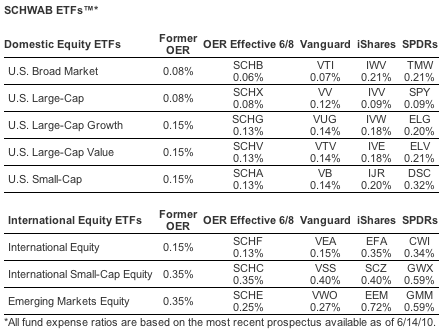
The bottom line for converting to the ETF version of equivalent mutual funds: lower costs = greater returns = more money. To illustrate this, I ran over to Mornginstar.com and compared the 5-year returns for VEIEX and VWO, the mutual fund and ETF versions of the Vanguard Emerging Markets Index Fund, respectively. Here’s the growth chart of $10,000 invested from 6/24/2005 to 6/24/2010 (click to enlarge):
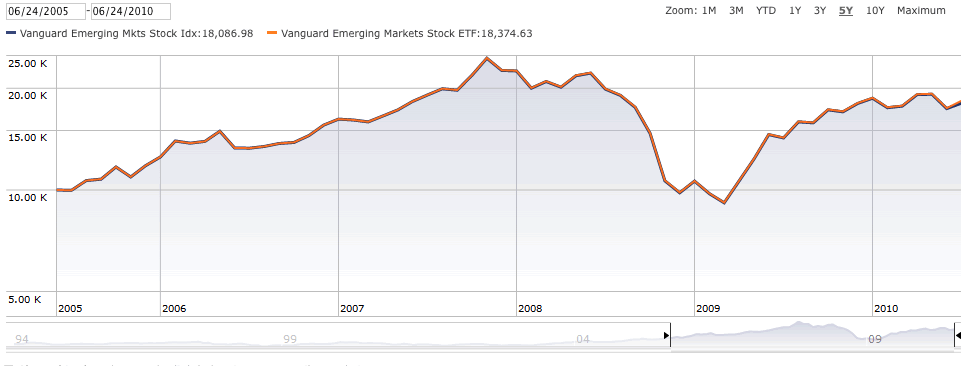
Looks pretty much the same, right? That’s because they hold the same stocks inside, but VWO has a lower cost through its lower annual expense ratio. That initial $10,000 would have ended up as $18,086.98 invested in VEIEX, while it would have become $18,374.63 invested in VWO – a difference of $287.65. Not a huge difference, but significant in my book, considering it required no increase in risk.
This comparison also doesn’t take into the additional 0.5% purchase fees and 0.25% redemption fees charged by VEIEX when buying and selling shares, although the hit does become less significant as your holding period lengthens.
 If you are invested in Vanguard mutual funds, you might have been confused by their recent announcement of
 The Best Credit Card Bonus Offers – 2025
 Big List of Free Stocks from Brokerage Apps
 Best Interest Rates on Cash - 2025
 Free Credit Scores x 3 + Free Credit Monitoring
 Best No Fee 0% APR Balance Transfer Offers
 Little-Known Cellular Data Plans That Can Save Big Money
 How To Haggle Your Cable or Direct TV Bill
 Big List of Free Consumer Data Reports (Credit, Rent, Work)