
Investment advisory firm Research Affiliates has updated their interactive Asset Allocation tool, which now provides estimates of expected returns for more than 130 asset classes and model portfolios. There are two expected return models, “valuation-dependent” and “yield-plus-growth”. In addition, you can input your own custom asset allocation.
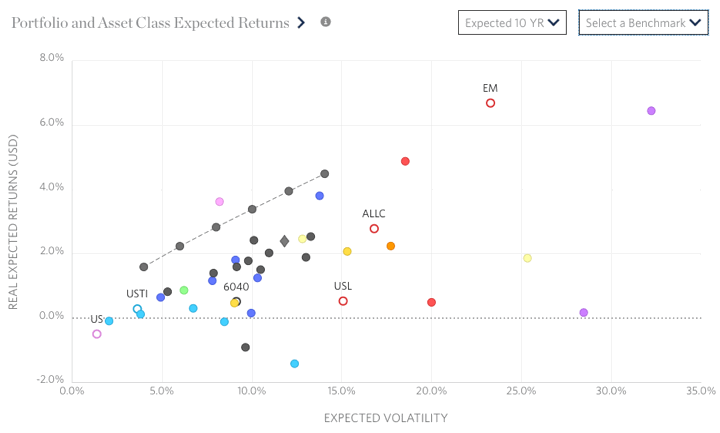
My initial reaction is that while the tool got new bells and whistles, it also became more confusing to navigate and harder on the eyes. Here’s a screenshot of their scatter plot showing the expected risk and return for several asset classes under their valuation-dependent model.
I created a custom portfolio “CustomMMB” using my current portfolio asset allocation and it is charted below on their risk/return map. In a separate window (not shown) you can see how each individual asset class contributes to the total expected return.
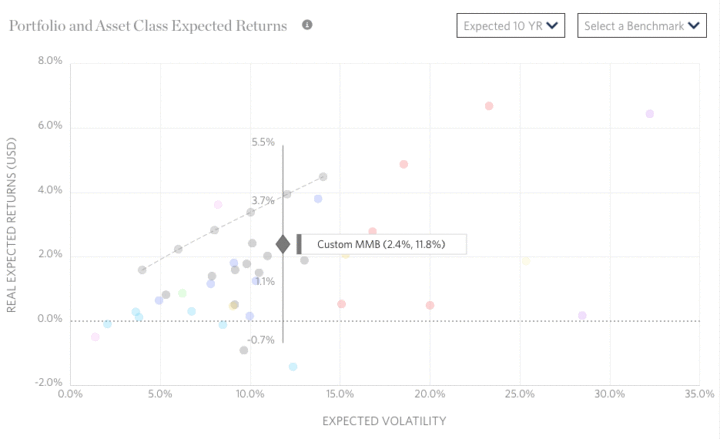
As you can see, my portfolio did not offer the maximum expected return for its risk level. The RA efficient model portfolio that did includes an exotic mix of asset classes, including Emerging Markets bonds (non-local currency), Bank Loans, US Private Equity, European Private Equity, and direct investments into US Commercial Real Estate (not through REITs). Unfortunately, I’m not even sure how to access many of those asset classes.
I appreciate that they freely share their research methodology and results, specifically covering the valuation perspective. US Equities have historically high valuations, but interest rates are also at historically lows. The next 10 years should be interesting…
Another portfolio analysis tool that lets you input your specific asset allocation is PortfolioCharts.com Safe Withdrawal Rate calculator. This Research Affiliates tool says my expected 10-year real return is only 2.4% (equates to a nominal expected return of 4.6%). The PortfolioCharts.com tool says the same personal asset allocation has a historical perpetual withdrawal rate of over 4% over a 40-year timeframe.
 I just noticed that PortfolioCharts.com has updated their




 Instead of watching the entire 6-hour Berkshire Hathaway (BRK) annual shareholder’s meeting, I first read through the
  I recently read (and re-read) a post at Philosophical Economics titled

 People always argue about how “efficient” the market truly is. Only academic, ivory-tower geeks believe in efficient markets right? My longstanding opinion is that no, markets are not 100% efficient, but it’s a tough, cutthroat world out there. Especially over the long run. Here’s yet another reminder to put in the anecdote folder.
 Barron’s has released their
  The Best Credit Card Bonus Offers – 2025
 Big List of Free Stocks from Brokerage Apps
 Best Interest Rates on Cash - 2025
 Free Credit Scores x 3 + Free Credit Monitoring
 Best No Fee 0% APR Balance Transfer Offers
 Little-Known Cellular Data Plans That Can Save Big Money
 How To Haggle Your Cable or Direct TV Bill
 Big List of Free Consumer Data Reports (Credit, Rent, Work)