Inside a recent Vanguard article was a nice graphic of the current glide path for all Vanguard Target Retirement funds, which shows how the fund’s asset allocation will change over time. The fund will automatically rebalance towards these allocations, even if market returns shift things.

First, you’ll notice that the Target Retirement Year of any specific fund assumes that you will retire at age 65. Nothing really changes from ages 25 to 40, and then from 40 onwards there is a gradual transition. According to the article, the changes will continue to change for 7 years after the Target Retirement Year with a final mix of 30% stocks and 70% bonds/cash. However, the graph above seems to indicate even less stocks past age 72. Either way, this means a fund will stick around even well after the retirement date has passed, like with the Vanguard Target Retirement 2010 Fund.
Knowing the glide path helps you decide if you want to make some slight adjustments you can make when buying one of these all-in-one funds:
- The Target Date assumes that you will retire at age 65. If you plan on retiring earlier or later than that, you can simply choose a different Target year. Keep in mind that your Social Security benefits will also adjust according to when elect to start receiving payments. When you do, that will provide a regular, inflation-adjusted income stream in addition to any income for retirement account withdrawals.
- The Target Date assumes a generic risk tolerance level. If you want a more aggressive or conservative asset allocation over time, again, simply choose a different Target year. This will shift your glide path above accordingly.
If you’re buying one of these things, you’re doing it for the low costs, ease of use, and even perhaps how it keeps you from fiddling too much. These funds are especially great if the great majority of your retirement savings are in tax-deferred accounts like 401ks and IRAs, which is probably true for many investors that are just starting out. Otherwise, you may decide that you want to separate asset classes according to their tax treatment by the government.
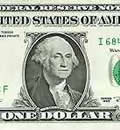 Money market funds always seek to maintain a published stable net asset value (NAV) of $1.00. If it drops even to $0.99, known as “breaking the buck”, people start to panic. Funds are allowed us book values and then round to the nearest penny ($0.995 becomes $1.00), so small fluctuations can be hidden from investors. On January 31st, the SEC started requiring money market funds to disclose their “shadow” NAV, which is the value of their holding at actual market prices out to four decimals places (i.e. $0.9995 or $1.0003). However, you only get to see them with a 60-day lag and by looking through SEC filings.
 Scottrade bought FocusShares as a subsidiary and has joined the free ETF landscape. They introduced 15 new low-cost
 I got an e-mail this morning that my trading account with OptionsXpress is merging with Charles Schwab. Well, considering Schwab (SCHW) has a market cap over 20 times that of OptionsXpress (OXPS), it’s more like they bought OX for their options/futures trading platform and active-trader clients. The WSJ reports:
 The Best Credit Card Bonus Offers – 2025
 Big List of Free Stocks from Brokerage Apps
 Best Interest Rates on Cash - 2025
 Free Credit Scores x 3 + Free Credit Monitoring
 Best No Fee 0% APR Balance Transfer Offers
 Little-Known Cellular Data Plans That Can Save Big Money
 How To Haggle Your Cable or Direct TV Bill
 Big List of Free Consumer Data Reports (Credit, Rent, Work)